


BMS Integration with Energy Monitoring: A Complete Guide for Facility Managers

BMS Integration with Energy Monitoring: A Complete Guide for Facility Managers
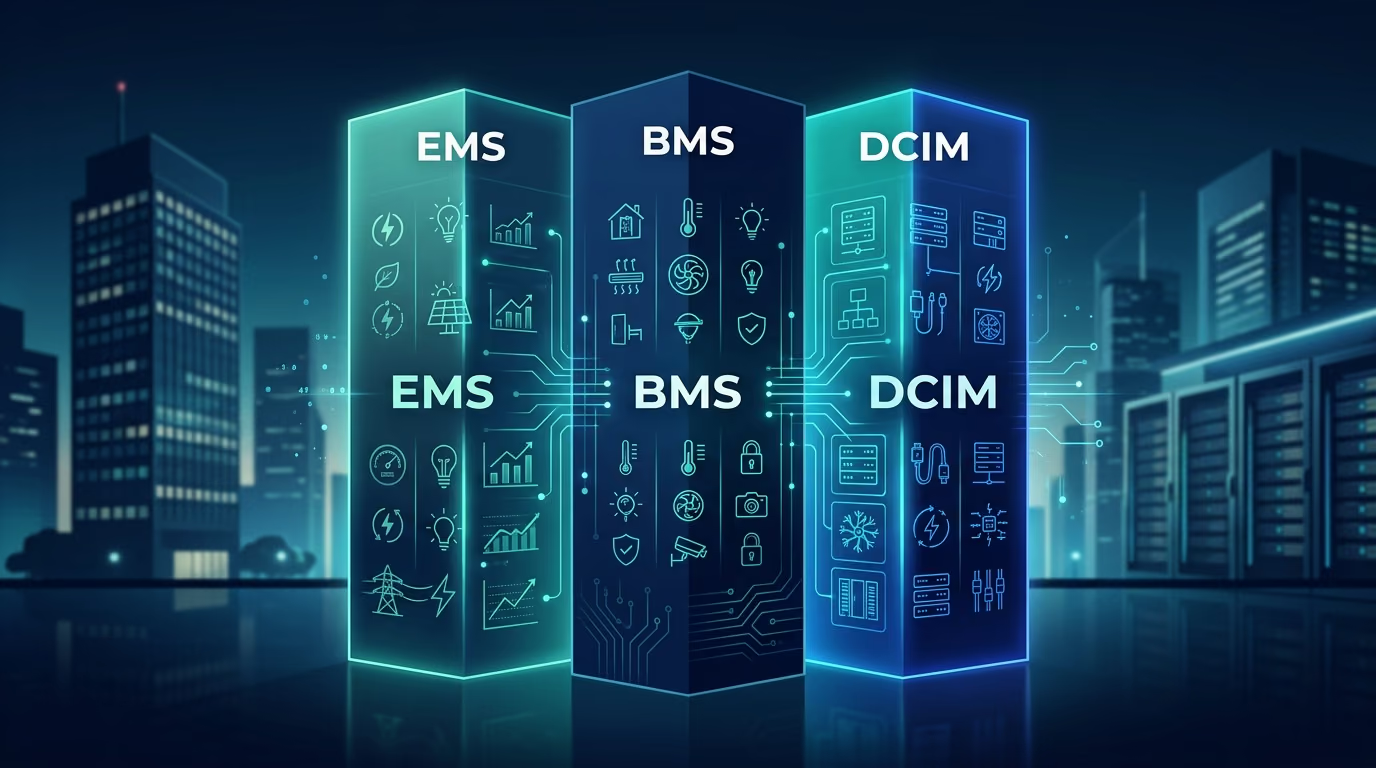
Modern facility management demands seamless coordination between multiple systems. Building Management Systems (BMS) control HVAC, lighting, and access, while energy monitoring tracks consumption and identifies inefficiencies. When integrated, these systems create a unified intelligence platform that drives operational excellence and measurable cost reductions.
EcoXplore's experience across 5 ASEAN markets shows that facilities with integrated BMS and energy monitoring systems achieve 15-25% energy cost savings compared to siloed deployments. This guide walks you through the integration architecture, benefits, and practical implementation steps.
Why Integration Matters
BMS and energy monitoring systems collect vastly different data. BMS focuses on equipment state (on/off status, setpoints, alarms), while energy monitoring tracks power consumption at circuit and device levels. Separately, they provide incomplete insights. Together, they enable:
- Real-time demand response: Energy data triggers BMS adjustments (e.g., reducing HVAC setpoint when peak demand pricing activates)
- Fault detection: Sudden energy spikes alert BMS to equipment degradation before failure occurs
- Optimisation: Occupancy sensors (BMS) combined with energy baselines (monitoring) automatically adjust conditioning for unoccupied zones
- Compliance: Unified audit trails meet ESG and regulatory requirements across Singapore, Thailand, Indonesia, Malaysia, and Vietnam
Integration Architecture: Data Flow and System Design
Successful BMS-energy integration follows three architectural patterns:
Pattern 1: Direct Connection connects the energy monitoring system (such as PecStar iEMS) directly to the BMS via open protocols (Modbus TCP, BACnet IP). Data flows bidirectionally: energy systems send consumption data and demand signals to BMS; BMS sends occupancy, equipment state, and setpoint changes to energy systems. This approach offers lowest latency but requires careful network security planning.
Pattern 2: Middleware Integration uses an IoT gateway or cloud platform as the integration layer. EcoXplore's integrated solutions employ this pattern, routing BMS and energy data through a unified dashboard where facility managers visualize relationships between system behavior and energy consumption. This approach isolates legacy systems from direct connection risk.
Pattern 3: API-Based Integration connects systems asynchronously through REST APIs. Cloud-based BMS platforms and modern energy monitoring software increasingly support this model, enabling real-time data exchange without direct network links.
Most facilities use Pattern 2 initially, then evolve toward Pattern 3 as they migrate to cloud-native systems. EcoXplore supports all three architectures across our 5 regional markets.
Key Benefits of Integration
Operational Efficiency: Integrated systems eliminate manual interventions. When energy monitoring detects that cooling demand exceeds historical baselines, BMS automatically verifies occupancy and equipment performance. At Singtel DC West, integrated monitoring reduced manual fault response time by 65%, preventing costly downtime in critical data centre infrastructure.
Cost Optimisation: Energy data combined with BMS equipment schedules reveals optimisation opportunities. A manufacturing facility monitoring both power quality (via PecStar iEMS) and compressed air system runtime can identify that air leaks drive compressor overload. BMS then triggers preventive maintenance before efficiency loss occurs. GlobalFoundries' facility in Singapore reduced energy waste by 18% through this integrated approach.
Demand Response Readiness: Southeast Asian grids increasingly offer demand response incentives. Integrated systems automatically curtail non-critical loads when utility signals peak pricing. Facility managers program energy priorities in the energy monitoring system; BMS executes the load shedding sequences in real-time.
Regulatory Compliance: Building owners in Singapore (BCA Green Mark), Thailand (LEED/Thai rating systems), and other markets face mandatory energy reporting. Integrated systems generate unified records proving compliance with ISO 9001:2015 quality standards and BizSAFE requirements.
Integration Challenges and How to Overcome Them
Challenge 1: Legacy System Incompatibility Many facilities operate BMS installations from 2010-2015 that lack modern network interfaces. Solution: Deploy an IoT gateway (such as EcoXplore's industrial controllers) that translates legacy BMS protocols to modern standards, eliminating expensive system replacement.
Challenge 2: Data Security in Open Networks Connecting BMS to external energy monitoring systems raises cybersecurity concerns. Solution: Use dedicated, firewalled networks for BMS-energy communication. EcoXplore's systems comply with IEC 62443 industrial IoT security standards, protecting your facility's critical infrastructure across all ASEAN markets.
Challenge 3: Standardization Across Multi-Site Deployments Large property owners operating facilities across multiple countries face incompatible BMS versions and energy monitoring vendors. Solution: Implement a middleware platform (PecStar iEMS) that normalizes data from diverse sources and presents a unified interface. This approach enables global facility managers to apply consistent energy policies across Singapore, Thailand, Indonesia, Malaysia, and Vietnam.
Challenge 4: Staff Training and Change Management Facility teams accustomed to separate systems struggle with integrated dashboards. Solution: Structure integration in phases. Begin with read-only access to energy data within the BMS, progressing to automated control only after staff confidence increases.
Step-by-Step Implementation Approach
Phase 1: Audit and Planning (Weeks 1-4) Document your current BMS configuration, energy monitoring setup, and network architecture. Identify integration points where data would provide the highest value (e.g., HVAC system with largest energy consumption). EcoXplore's technical team conducts this audit for facilities across ASEAN, producing a prioritized integration roadmap.
Phase 2: Pilot Integration (Weeks 5-12) Select a single building or floor as your pilot. Connect energy monitoring to BMS for non-critical zones first. Monitor data quality and system stability. At the National Museum in Singapore, this 8-week pilot verified that integrated monitoring could support automated HVAC scheduling without disrupting climate control for sensitive exhibits.
Phase 3: Security Hardening (Weeks 13-16) Before expanding to production environments, implement network segmentation, access controls, and audit logging. EcoXplore's BizSAFE Star certification and ISO 45001:2018 safety management experience ensure integration meets both cybersecurity and operational safety standards.
Phase 4: Rollout and Optimisation (Weeks 17+) Expand integration across additional buildings. Train facility staff on dashboard usage. Establish KPIs: monthly energy cost reduction, downtime hours avoided, demand response events successfully executed. Continuously refine control algorithms based on seasonal data.
Integration Case Study: Resorts World Sentosa
This large Singapore resort integrated BMS across 3 casino buildings with centralised energy monitoring. Before integration, energy consumption was tracked monthly by utility bills. After integration via PecStar iEMS, facility managers achieved real-time visibility into 47 distinct areas. Within 6 months, they automated HVAC sequencing based on guest occupancy (BMS data) and achieved a 16% reduction in energy costs while maintaining guest comfort standards.
Next Steps: Getting Started with Your Facility
Integration complexity varies by facility size, system age, and regional regulatory requirements. Start with a conversation about your current systems. EcoXplore has completed BMS-energy integrations across Singapore, Thailand, Indonesia, Malaysia, and Vietnam, serving sectors from data centres to government buildings.
Ready to integrate your BMS and energy monitoring systems? Learn about EcoXplore's BMS integration solutions or explore our energy monitoring platform. Contact our facility integration team for a personalized assessment of your buildings and integration opportunities.





More About EcoXplore
We are dedicated to empowering businesses with software and services that drive efficiency and growth
View more: About EcoXplore | Indonesia Energy & IoT Engineers Since 2011


