


.svg)





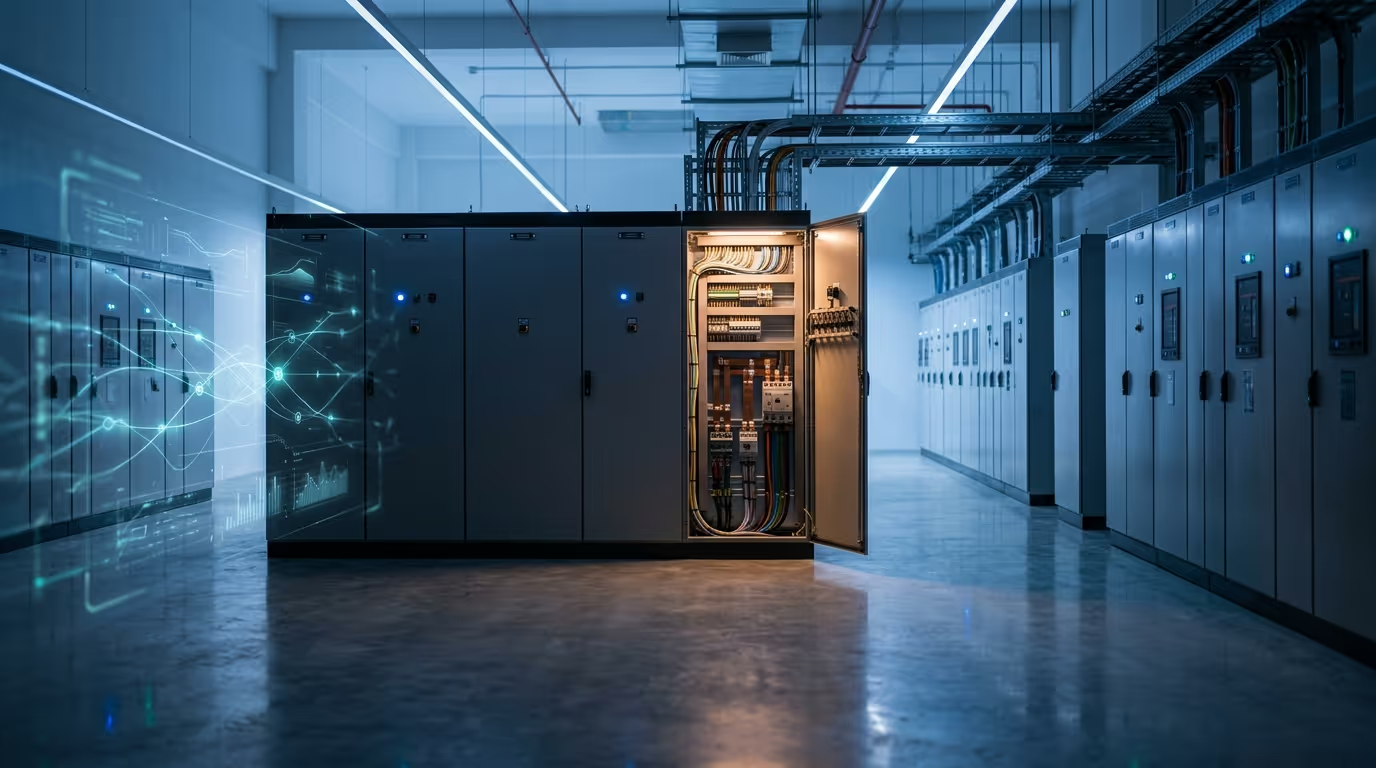


Condition Monitoring and Predictive Maintenance: Reducing Unplanned Downtime for Critical Equipment

Condition Monitoring and Predictive Maintenance: Reducing Unplanned Downtime for Critical Equipment
Equipment failures cost money. An unexpected chiller breakdown in a data centre costs thousands per hour in cooling loss. An electrical panel fault in a manufacturing plant triggers production stoppage and safety risks. A transformer failure in a government building disrupts critical services.
Traditional maintenance responds to failures after they occur (reactive) or follows fixed schedules regardless of equipment condition (preventive). Condition monitoring and predictive maintenance represent a third approach: continuous observation of equipment health, enabling maintenance exactly when equipment needs it. Facilities implementing this strategy across Singapore, Thailand, Indonesia, Malaysia, and Vietnam report 25-40% reductions in unplanned downtime and 10-15% energy savings.
Reactive vs. Preventive vs. Predictive: Understanding the Difference
Reactive Maintenance waits for equipment to fail. Maintenance teams respond when alarms trigger. This approach minimizes scheduled maintenance costs but maximizes emergency repair expenses, safety risks, and productivity loss. A facility discovering a water pump failure while a building is occupied faces emergency repair costs, potential water damage, and liability exposure.
Preventive Maintenance follows fixed schedules: replace oil every 500 operating hours, inspect bearings every quarter, test backup generators annually. This reduces unexpected failures compared to reactive maintenance but often misses the optimal maintenance window. Equipment replaced on schedule might have had another 200 hours of useful life. Conversely, equipment can fail between scheduled intervals.
Predictive Maintenance monitors equipment condition continuously and triggers maintenance only when data indicates degradation. Sensors measure temperature, vibration, electrical parameters, and other health indicators. Analytics algorithms detect patterns preceding failure. Maintenance teams schedule work before failure occurs, at optimal times for facility operations. This approach combines the safety benefits of preventive maintenance with the cost efficiency of predictive intervention.
A manufacturing facility operating 24/7 cannot afford unexpected downtime. Condition monitoring enables maintenance teams to schedule equipment work during planned production downtime, minimizing impact on output.
Key Condition Monitoring Techniques
Thermal Monitoring: Temperature is the most accessible health indicator. Electrical equipment (transformers, switchgear, motors) runs cooler when operating efficiently. Rising temperature indicates overload, degrading insulation, or internal faults. Infrared cameras and embedded temperature sensors track equipment thermal signature. At GlobalFoundries' facility in Singapore, thermal monitoring on motor control centers detected winding degradation 3 weeks before failure would have occurred, enabling planned replacement during scheduled maintenance window.
Vibration Analysis: Mechanical equipment (pumps, compressors, fans, bearing assemblies) produces distinctive vibration signatures when healthy. Bearing wear, blade damage, and shaft misalignment alter vibration frequency and amplitude. Accelerometers mounted on critical equipment send vibration data to condition monitoring systems. Algorithms compare current vibration to baseline, alerting maintenance teams to degradation. Data centre cooling systems monitored for vibration anomalies enable early identification of failing pump bearings before complete seizure occurs.
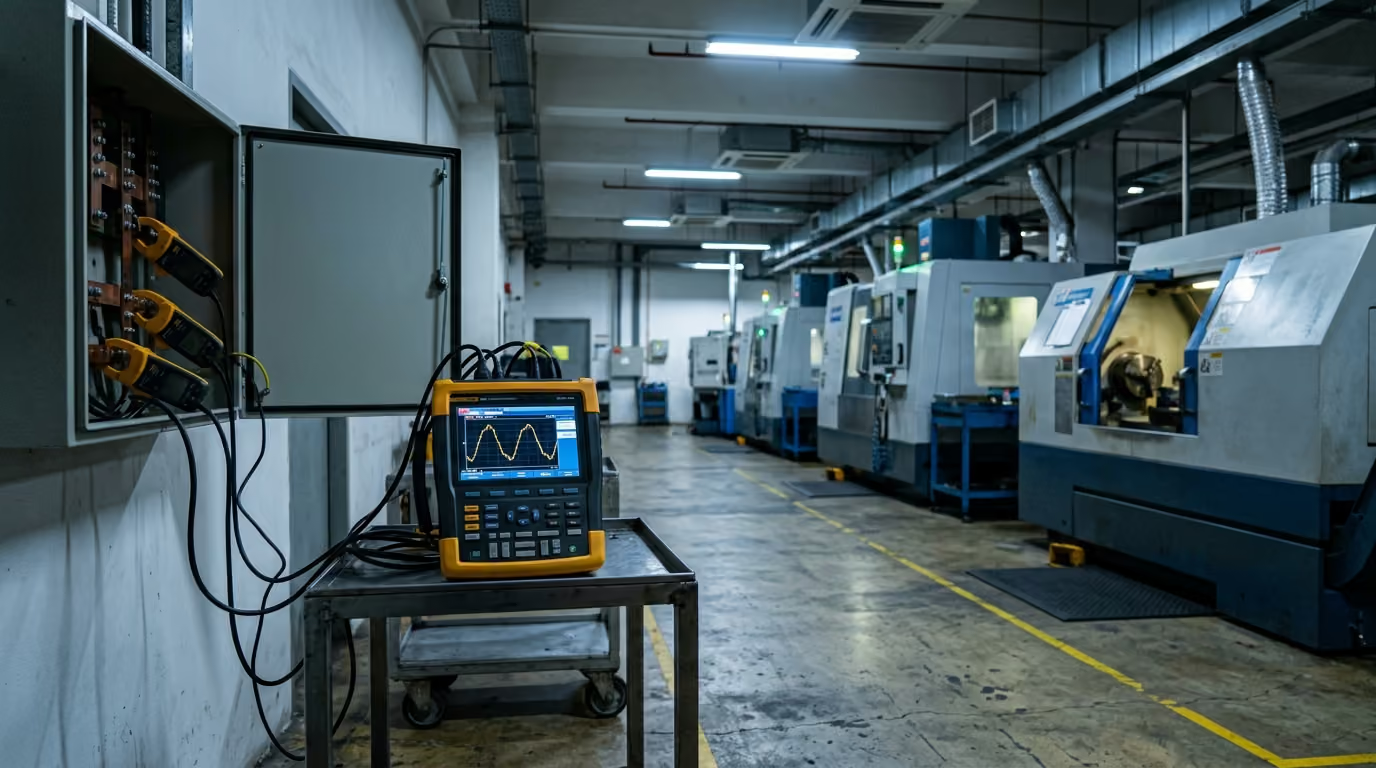
Power Quality Monitoring: Electrical equipment health reflects in power quality metrics. Equipment drawing excessive current, operating with poor power factor, or experiencing harmonic distortion indicates problems. EcoXplore's power quality monitoring systems (PecStar iEMS) track voltage stability, current balance, and harmonic content, revealing motor winding problems, transformer core saturation, and electrical system faults. A manufacturing facility discovered through power quality analysis that one of 12 compressors was operating with 40% higher current than peers, enabling targeted maintenance to prevent catastrophic failure.
Oil Analysis: For oil-cooled equipment (transformers, hydraulic systems), periodic oil samples reveal internal degradation. Rising particle count, dissolved gas analysis (DGA), and acid number (AN) indicate oil oxidation and equipment wear. Condition-based oil sampling (rather than calendar-based intervals) optimizes maintenance scheduling. Critical transformers in Singapore buildings have avoided premature replacement through predictive oil analysis, extending equipment life by 5-10 years.
Acoustic Monitoring: Ultrasonic analysis detects high-frequency sounds from electrical discharge, bearing friction, and fluid movement. Facilities with compressed air systems benefit from acoustic leak detection, identifying expensive compressed air losses before they accumulate into significant waste.
Integration with CMMS and Work Planning
Condition monitoring data has no value without effective response. Computerized Maintenance Management Systems (CMMS) link condition data to work planning and execution:
Automated Work Order Generation: When condition monitoring detects equipment degradation, alerts trigger automatic work order generation in the CMMS. Maintenance planners review the condition data, confirm the alert, and schedule maintenance work. This eliminates delays between detection and action.
Predictive Scheduling: CMMS systems can correlate equipment condition with facility operations schedules. A chiller showing early signs of bearing wear can be scheduled for maintenance during a planned production shutdown, rather than forcing emergency maintenance during critical operations.
Inventory Optimization: Predictive alerts enable maintenance teams to order spare parts weeks before needed, ensuring parts availability and reducing repair time. Emergency repairs often require expedited shipping and premium pricing. Predictive scheduling eliminates this cost premium.
Compliance Documentation: CMMS audit trails document condition monitoring results, maintenance actions, and equipment history. This record-keeping meets regulatory requirements across Singapore (BCA standards), Thailand, Indonesia, Malaysia, and Vietnam, proving systematic equipment care to auditors and insurers.
ROI of Predictive Maintenance: Numbers That Matter
A typical commercial building in Singapore operates 20+ critical systems: chillers, pumps, generators, electrical equipment, controls. Unplanned failure of a single chiller triggers 8-12 hours of downtime, $15,000-30,000 emergency repair costs, and facility disruption. Over a 20-year building lifecycle, reactive maintenance might face 3-5 major equipment failures, totaling $45,000-150,000 in emergency costs plus productivity loss.
Condition monitoring systems (sensors, monitoring software, analytics) cost $8,000-15,000 for a typical building. Maintenance time to review alerts and plan work adds $3,000-5,000 annually. Total 5-year investment: $20,000-40,000.
Eliminating just 2-3 major equipment failures through predictive maintenance generates $30,000-90,000 in avoided emergency costs, recovering the entire investment. Additional benefits (reduced energy consumption, extended equipment life, improved safety) provide additional returns.
At SingTel DC West, condition monitoring across 12 large chillers prevented 2 compressor failures in year 1, generating $85,000 in avoided emergency repairs against a $35,000 monitoring system investment. Year 2 provided additional benefit as the system learned normal operating patterns and fine-tuned alert sensitivity.
Implementing Condition Monitoring: A Phased Approach
Phase 1: Identify Critical Equipment (Weeks 1-2) Not all equipment requires condition monitoring. Focus on systems where failure is costly, such as large HVAC systems, electrical distribution equipment, critical pumps, and power generation. EcoXplore assesses facility systems and recommends monitoring priorities.
Phase 2: Sensor Deployment (Weeks 3-6) Install monitoring sensors on critical equipment. Thermal sensors require basic mounting; vibration sensors need careful positioning on bearing housings; power quality monitoring integrates with electrical panels. Professional installation ensures accurate baseline data.
Phase 3: Baseline Establishment (Weeks 7-12) Operate systems normally while collecting 4-6 weeks of sensor data. Analytics algorithms establish baseline patterns: normal temperature ranges, typical vibration signatures, expected power consumption. Baseline variation accounts for seasonal changes and operational differences.
Phase 4: Anomaly Detection Activation (Week 13+) Once baseline is established, enable automated alerting. Early alerts may require calibration: some trigger false positives until algorithms learn facility-specific patterns. Maintenance teams review alerts, confirm issues, and plan response. Over time, alert accuracy improves as the system learns.
Condition Monitoring for Facility Energy Management
Equipment efficiency directly impacts facility energy consumption. A chiller operating with fouled condenser tubes works harder, consuming 20-30% more energy. Condition monitoring reveals efficiency degradation long before energy bills arrive. PecStar iEMS combines energy monitoring with condition alerts, enabling facility managers to schedule maintenance that simultaneously improves equipment reliability and reduces energy costs.
The National Museum in Singapore reduced cooling energy by 12% after condition monitoring identified fouling and bearing wear on 3 of 8 chillers. Preventive maintenance restored efficiency; proactive scheduling enabled work during non-occupancy hours, maintaining precise climate control for sensitive exhibits.
Getting Started with Condition Monitoring
Predictive maintenance isn't new technology, but modern IoT sensors, cloud analytics, and integrated facilities platforms make it accessible to facilities of all sizes. Whether you operate a single building or a multi-country portfolio across ASEAN, condition monitoring reduces unplanned downtime and optimizes maintenance spending.
Ready to implement predictive maintenance? Explore EcoXplore's condition monitoring solutions or learn about thermal monitoring for critical equipment. Power quality monitoring reveals electrical equipment health. Contact our predictive maintenance specialists for a facility assessment and monitoring roadmap tailored to your equipment and operational requirements.


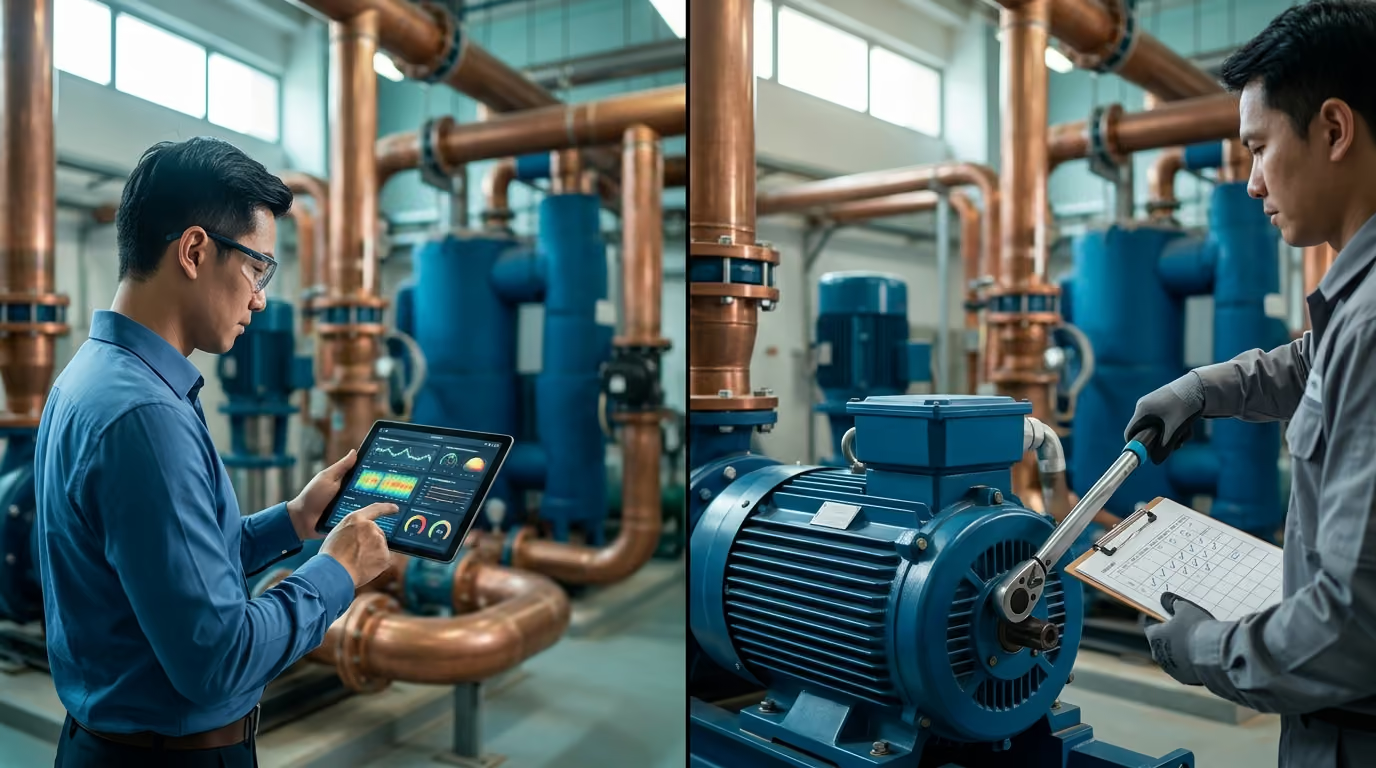


条件监测和预测性维护:减少关键设备计划外停机时间
状态监控和预测性维护:减少关键设备的计划外停机
设备故障成本很高。数据中心冷却器的意外故障每小时损失数千美元的冷却损失。制造厂中的电气面板故障触发生产停止和安全风险。政府建筑中的变压器故障中断关键服务。
传统维护在故障后响应故障(反应性)或遵循固定计划,无论设备状态如何(预防性)。状态监控和预测性维护代表第三种方法:对设备健康的持续观察,使维护恰好在设备需要时进行。在新加坡、泰国、印度尼西亚、马来西亚和越南实施此战略的设施报告计划外停机减少25-40%,能源节省10-15%。
反应性与预防性与预测性:理解差异
反应性维护等待设备故障。维护团队在告警触发时响应。此方法最小化计划维护成本但最大化紧急修复费用、安全风险和生产力损失。发现水泵故障而建筑被占用的设施面临紧急维修成本、潜在水损和责任风险。
预防性维护遵循固定时间表:每500个工作小时更换油、每季度检查轴承、每年测试备用发电机。与反应性维护相比,这减少了意外故障,但通常错过最佳维护窗口。按计划更换的设备可能还有200个小时的有用寿命。相反,设备可能在计划间隔之间故障。
预测性维护持续监控设备状态并仅在数据指示衰退时触发维护。传感器测量温度、振动、电气参数和其他健康指标。分析算法检测故障前的模式。维护团队在故障发生前安排工作,在对设施运营最优的时间。此方法结合了预防性维护的安全优势与预测性干预的成本效率。
全天候运营的制造设施无法承受意外停机。状态监控使维护团队能够在计划生产停机期间安排设备工作,最小化对产出的影响。
关键状态监控技术
热监控:温度是最易获取的健康指标。电气设备(变压器、开关柜、电动机)在高效运行时运行得更冷。温度上升表示过载、绝缘衰退或内部故障。红外摄像机和嵌入式温度传感器跟踪设备热特征。在新加坡GlobalFoundries设施,电动机控制中心上的热监控检测到线圈衰退,提前3周于故障发生前,使计划维护窗口内的计划更换成为可能。
振动分析:机械设备(泵、压缩机、风扇、轴承组件)在健康时产生独特的振动特征。轴承磨损、叶片损伤和轴不对中改变振动频率和幅度。加速度计安装在关键设备上并将振动数据发送到状态监控系统。算法将当前振动与基线进行比较,提醒维护团队衰退。为振动异常监控的数据中心冷却系统使早期识别故障泵轴承在完全卡住前成为可能。
功率质量监控:电气设备健康反映在功率质量指标中。设备吸收过量电流、以较差功率因数运行或经历谐波失真表示问题。EcoXplore的功率质量监控系统(PecStar iEMS)跟踪电压稳定性、电流平衡和谐波含量,揭示电动机线圈问题、变压器铁芯饱和和电气系统故障。一个制造设施通过功率质量分析发现12台压缩机中的1台运行时电流高同行40%,使有针对性的维护能够防止灾难性故障成为可能。
油分析:对于油冷设备(变压器、液压系统),定期油样揭示内部衰退。上升的颗粒计数、溶解气体分析(DGA)和酸数(AN)表示油氧化和设备磨损。基于状态的油采样(而不是基于日历的间隔)优化维护计划。新加坡建筑中的关键变压器通过预测油分析避免了过早更换,将设备寿命延长了5-10年。
声学监控:超声波分析检测来自电气放电、轴承摩擦和流体移动的高频声音。配备压缩空气系统的设施受益于声学泄漏检测,在它们累积成显著浪费前识别昂贵的压缩空气损失。
与CMMS和工作规划的集成
状态监控数据在没有有效响应的情况下没有价值。计算机化维护管理系统(CMMS)将状态数据链接到工作规划和执行:
自动工单生成:当状态监控检测到设备衰退时,警报在CMMS中触发自动工单生成。维护计划者审查状态数据、确认警报并安排维护工作。这消除了检测和行动之间的延迟。
预测计划:CMMS系统可以将设备状态与设施运营时间表关联。显示轴承早期磨损迹象的冷却器可在计划生产停机期间安排维护,而不是在关键运营期间强制紧急维护。
库存优化:预测警报使维护团队能够在需要前数周订购备件,确保部件可用性并减少维修时间。紧急维修通常需要加急运送和溢价定价。预测计划消除了此成本溢价。
合规性文档:CMMS审计跟踪记录状态监控结果、维护行动和设备历史。此记录保存符合新加坡(BCA标准)、泰国、印度尼西亚、马来西亚和越南的法规要求,向审计员和保险公司证明系统设备护理。
预测性维护的投资回报率:重要的数字
新加坡的典型商业建筑运营20多个关键系统:冷却器、泵、发电机、电气设备、控制。单个冷却器的意外故障触发8-12小时停机、15,000-30,000美元的紧急维修成本和设施中断。在20年建筑生命周期内,反应性维护可能面临3-5次主要设备故障,总计45,000-150,000美元的紧急成本加生产力损失。
状态监控系统(传感器、监控软件、分析)对典型建筑成本为8,000-15,000美元。维护时间审查警报和规划工作每年增加3,000-5,000美元。5年总投资:20,000-40,000美元。
仅通过预测性维护消除2-3次主要设备故障产生30,000-90,000美元的已避免紧急成本,恢复整个投资。其他优势(能源消耗减少、设备寿命延长、安全改进)提供额外返回。
在SingTel DC West,跨12个大型冷却器的状态监控在第1年防止了2次压缩机故障,针对35,000美元的监控系统投资生成85,000美元的已避免紧急维修。第2年提供额外优势,因为系统学习正常操作模式并微调警报灵敏度。
实施状态监控:分阶段方法
阶段1:识别关键设备(第1-2周)并非所有设备都需要状态监控。关注故障代价昂贵的系统,如大型暖通空调系统、电气配电设备、关键泵和电力生成。EcoXplore评估设施系统并推荐监控优先级。
阶段2:传感器部署(第3-6周)在关键设备上安装监控传感器。热传感器需要基本安装;振动传感器需要仔细定位在轴承外壳;功率质量监控与电气面板集成。专业安装确保准确的基线数据。
阶段3:基线建立(第7-12周)在收集4-6周传感器数据的同时正常运营系统。分析算法建立基线模式:正常温度范围、典型振动特征、预期功率消耗。基线变化考虑季节变化和运营差异。
阶段4:异常检测激活(第13周及以后)建立基线后,启用自动告警。早期告警可能需要校准:某些可能触发虚假正面,直到算法学习设施特定模式。维护团队审查告警、确认问题并规划响应。随着时间推移,当系统学习时告警准确性改进。
设施能源管理的状态监控
设备效率直接影响设施能源消耗。具有污垢冷凝器管的冷却器工作更硬,消耗20-30%更多能源。状态监控在能源账单到达前长时间揭示效率衰退。PecStar iEMS将能源监控与状态警报结合,使设施管理人员能够安排同时改进设备可靠性并减少能源成本的维护。
新加坡国家博物馆在状态监控识别出8台冷却器中3台的污垢和轴承磨损后冷却能源减少了12%。预防性维护恢复了效率;主动计划使工作在非占用时进行,对敏感展品维持精确气候控制。
状态监控入门
预测性维护不是新技术,但现代物联网传感器、云分析和集成设施平台使其对所有规模的设施都可访问。无论您在整个东盟运营单座建筑或多国投资组合,状态监控都减少了计划外停机并优化了维护支出。
准备好实施预测性维护了吗?探索EcoXplore的状态监控解决方案或了解关键设备的热监控。功率质量监控揭示电气设备健康。联系我们的预测性维护专家,获得针对您设备和运营要求定制的设施评估和监控路线图。
การตรวจสอบสภาพและการบำรุงรักษาเชิงทำนาย: การลดเวลาหยุดทำงานที่ไม่ได้วางแผนของอุปกรณ์ที่สำคัญ
Condition Monitoring and Predictive Maintenance: Reducing Unplanned Downtime for Critical Equipment
Equipment failures cost money. An unexpected chiller breakdown in a data centre costs thousands per hour in cooling loss. An electrical panel fault in a manufacturing plant triggers production stoppage and safety risks. A transformer failure in a government building disrupts critical services.
Traditional maintenance responds to failures after they occur (reactive) or follows fixed schedules regardless of equipment condition (preventive). Condition monitoring and predictive maintenance represent a third approach: continuous observation of equipment health, enabling maintenance exactly when equipment needs it. Facilities implementing this strategy across Singapore, Thailand, Indonesia, Malaysia, and Vietnam report 25-40% reductions in unplanned downtime and 10-15% energy savings.
Reactive vs. Preventive vs. Predictive: Understanding the Difference
Reactive Maintenance waits for equipment to fail. Maintenance teams respond when alarms trigger. This approach minimizes scheduled maintenance costs but maximizes emergency repair expenses, safety risks, and productivity loss. A facility discovering a water pump failure while a building is occupied faces emergency repair costs, potential water damage, and liability exposure.
Preventive Maintenance follows fixed schedules: replace oil every 500 operating hours, inspect bearings every quarter, test backup generators annually. This reduces unexpected failures compared to reactive maintenance but often misses the optimal maintenance window. Equipment replaced on schedule might have had another 200 hours of useful life. Conversely, equipment can fail between scheduled intervals.
Predictive Maintenance monitors equipment condition continuously and triggers maintenance only when data indicates degradation. Sensors measure temperature, vibration, electrical parameters, and other health indicators. Analytics algorithms detect patterns preceding failure. Maintenance teams schedule work before failure occurs, at optimal times for facility operations. This approach combines the safety benefits of preventive maintenance with the cost efficiency of predictive intervention.
A manufacturing facility operating 24/7 cannot afford unexpected downtime. Condition monitoring enables maintenance teams to schedule equipment work during planned production downtime, minimizing impact on output.
Key Condition Monitoring Techniques
Thermal Monitoring: Temperature is the most accessible health indicator. Electrical equipment (transformers, switchgear, motors) runs cooler when operating efficiently. Rising temperature indicates overload, degrading insulation, or internal faults. Infrared cameras and embedded temperature sensors track equipment thermal signature. At GlobalFoundries' facility in Singapore, thermal monitoring on motor control centers detected winding degradation 3 weeks before failure would have occurred, enabling planned replacement during scheduled maintenance window.
Vibration Analysis: Mechanical equipment (pumps, compressors, fans, bearing assemblies) produces distinctive vibration signatures when healthy. Bearing wear, blade damage, and shaft misalignment alter vibration frequency and amplitude. Accelerometers mounted on critical equipment send vibration data to condition monitoring systems. Algorithms compare current vibration to baseline, alerting maintenance teams to degradation. Data centre cooling systems monitored for vibration anomalies enable early identification of failing pump bearings before complete seizure occurs.
Power Quality Monitoring: Electrical equipment health reflects in power quality metrics. Equipment drawing excessive current, operating with poor power factor, or experiencing harmonic distortion indicates problems. EcoXplore's power quality monitoring systems (PecStar iEMS) track voltage stability, current balance, and harmonic content, revealing motor winding problems, transformer core saturation, and electrical system faults. A manufacturing facility discovered through power quality analysis that one of 12 compressors was operating with 40% higher current than peers, enabling targeted maintenance to prevent catastrophic failure.
Oil Analysis: For oil-cooled equipment (transformers, hydraulic systems), periodic oil samples reveal internal degradation. Rising particle count, dissolved gas analysis (DGA), and acid number (AN) indicate oil oxidation and equipment wear. Condition-based oil sampling (rather than calendar-based intervals) optimizes maintenance scheduling. Critical transformers in Singapore buildings have avoided premature replacement through predictive oil analysis, extending equipment life by 5-10 years.
Acoustic Monitoring: Ultrasonic analysis detects high-frequency sounds from electrical discharge, bearing friction, and fluid movement. Facilities with compressed air systems benefit from acoustic leak detection, identifying expensive compressed air losses before they accumulate into significant waste.
Integration with CMMS and Work Planning
Condition monitoring data has no value without effective response. Computerized Maintenance Management Systems (CMMS) link condition data to work planning and execution:
Automated Work Order Generation: When condition monitoring detects equipment degradation, alerts trigger automatic work order generation in the CMMS. Maintenance planners review the condition data, confirm the alert, and schedule maintenance work. This eliminates delays between detection and action.
Predictive Scheduling: CMMS systems can correlate equipment condition with facility operations schedules. A chiller showing early signs of bearing wear can be scheduled for maintenance during a planned production shutdown, rather than forcing emergency maintenance during critical operations.
Inventory Optimization: Predictive alerts enable maintenance teams to order spare parts weeks before needed, ensuring parts availability and reducing repair time. Emergency repairs often require expedited shipping and premium pricing. Predictive scheduling eliminates this cost premium.
Compliance Documentation: CMMS audit trails document condition monitoring results, maintenance actions, and equipment history. This record-keeping meets regulatory requirements across Singapore (BCA standards), Thailand, Indonesia, Malaysia, and Vietnam, proving systematic equipment care to auditors and insurers.
ROI of Predictive Maintenance: Numbers That Matter
A typical commercial building in Singapore operates 20+ critical systems: chillers, pumps, generators, electrical equipment, controls. Unplanned failure of a single chiller triggers 8-12 hours of downtime, $15,000-30,000 emergency repair costs, and facility disruption. Over a 20-year building lifecycle, reactive maintenance might face 3-5 major equipment failures, totaling $45,000-150,000 in emergency costs plus productivity loss.
Condition monitoring systems (sensors, monitoring software, analytics) cost $8,000-15,000 for a typical building. Maintenance time to review alerts and plan work adds $3,000-5,000 annually. Total 5-year investment: $20,000-40,000.
Eliminating just 2-3 major equipment failures through predictive maintenance generates $30,000-90,000 in avoided emergency costs, recovering the entire investment. Additional benefits (reduced energy consumption, extended equipment life, improved safety) provide additional returns.
At SingTel DC West, condition monitoring across 12 large chillers prevented 2 compressor failures in year 1, generating $85,000 in avoided emergency repairs against a $35,000 monitoring system investment. Year 2 provided additional benefit as the system learned normal operating patterns and fine-tuned alert sensitivity.
Implementing Condition Monitoring: A Phased Approach
Phase 1: Identify Critical Equipment (Weeks 1-2) Not all equipment requires condition monitoring. Focus on systems where failure is costly, such as large HVAC systems, electrical distribution equipment, critical pumps, and power generation. EcoXplore assesses facility systems and recommends monitoring priorities.
Phase 2: Sensor Deployment (Weeks 3-6) Install monitoring sensors on critical equipment. Thermal sensors require basic mounting; vibration sensors need careful positioning on bearing housings; power quality monitoring integrates with electrical panels. Professional installation ensures accurate baseline data.
Phase 3: Baseline Establishment (Weeks 7-12) Operate systems normally while collecting 4-6 weeks of sensor data. Analytics algorithms establish baseline patterns: normal temperature ranges, typical vibration signatures, expected power consumption. Baseline variation accounts for seasonal changes and operational differences.
Phase 4: Anomaly Detection Activation (Week 13+) Once baseline is established, enable automated alerting. Early alerts may require calibration: some trigger false positives until algorithms learn facility-specific patterns. Maintenance teams review alerts, confirm issues, and plan response. Over time, alert accuracy improves as the system learns.
Condition Monitoring for Facility Energy Management
Equipment efficiency directly impacts facility energy consumption. A chiller operating with fouled condenser tubes works harder, consuming 20-30% more energy. Condition monitoring reveals efficiency degradation long before energy bills arrive. PecStar iEMS combines energy monitoring with condition alerts, enabling facility managers to schedule maintenance that simultaneously improves equipment reliability and reduces energy costs.
The National Museum in Singapore reduced cooling energy by 12% after condition monitoring identified fouling and bearing wear on 3 of 8 chillers. Preventive maintenance restored efficiency; proactive scheduling enabled work during non-occupancy hours, maintaining precise climate control for sensitive exhibits.
Getting Started with Condition Monitoring
Predictive maintenance isn't new technology, but modern IoT sensors, cloud analytics, and integrated facilities platforms make it accessible to facilities of all sizes. Whether you operate a single building or a multi-country portfolio across ASEAN, condition monitoring reduces unplanned downtime and optimizes maintenance spending.
Ready to implement predictive maintenance? Explore EcoXplore's condition monitoring solutions or learn about thermal monitoring for critical equipment. Power quality monitoring reveals electrical equipment health. Contact our predictive maintenance specialists for a facility assessment and monitoring roadmap tailored to your equipment and operational requirements.
Monitoring Kondisi dan Pemeliharaan Prediktif: Mengurangi Downtime yang Tidak Terencana untuk Peralatan Kritis
Monitoring Kondisi dan Pemeliharaan Prediktif: Mengurangi Downtime yang Tidak Terencana untuk Peralatan Kritis
Kegagalan peralatan mengeluarkan biaya. Kegagalan chiller yang tidak terduga di data centre mengeluarkan biaya ribuan per jam dalam kehilangan pendinginan. Kegagalan panel listrik di pabrik manufaktur memicu penghentian produksi dan risiko keselamatan. Kegagalan trafo di gedung pemerintah mengganggu layanan kritis.
Pemeliharaan tradisional merespons kegagalan setelah terjadi (reaktif) atau mengikuti jadwal tetap terlepas dari kondisi peralatan (preventif). Pemantauan kondisi dan pemeliharaan prediktif mewakili pendekatan ketiga: observasi berkelanjutan dari kesehatan peralatan, yang memungkinkan pemeliharaan tepat saat peralatan membutuhkannya. Fasilitas yang menerapkan strategi ini di seluruh Singapura, Thailand, Indonesia, Malaysia, dan Vietnam melaporkan pengurangan 25-40% dalam downtime yang tidak terencana dan penghematan energi 10-15%.
Reaktif vs. Preventif vs. Prediktif: Memahami Perbedaannya
Pemeliharaan Reaktif menunggu peralatan gagal. Tim pemeliharaan merespons saat alarm berbunyi. Pendekatan ini meminimalkan biaya pemeliharaan terjadwal tetapi memaksimalkan biaya perbaikan darurat, risiko keselamatan, dan kehilangan produktivitas. Fasilitas yang menemukan kegagalan pompa air saat gedung ditempati menghadapi biaya perbaikan darurat, kerusakan air potensial, dan paparan tanggung jawab.
Pemeliharaan Preventif mengikuti jadwal tetap: ganti oli setiap 500 jam operasi, periksa bantalan setiap kuartal, uji generator cadangan setiap tahun. Ini mengurangi kegagalan yang tidak terduga dibandingkan dengan pemeliharaan reaktif tetapi sering kali melewatkan jendela pemeliharaan optimal. Peralatan yang diganti sesuai jadwal mungkin memiliki 200 jam lagi dalam kehidupan yang berguna. Sebaliknya, peralatan dapat gagal di antara interval terjadwal.
Pemeliharaan Prediktif memantau kondisi peralatan secara berkelanjutan dan hanya memicu pemeliharaan saat data menunjukkan degradasi. Sensor mengukur suhu, getaran, parameter listrik, dan indikator kesehatan lainnya. Algoritme analitik mendeteksi pola yang mendahului kegagalan. Tim pemeliharaan menjadwalkan pekerjaan sebelum kegagalan terjadi, pada waktu optimal untuk operasi fasilitas. Pendekatan ini menggabungkan manfaat keselamatan pemeliharaan preventif dengan efisiensi biaya intervensi prediktif.
Fasilitas manufaktur yang beroperasi 24/7 tidak dapat mentolerir downtime yang tidak terduga. Pemantauan kondisi memungkinkan tim pemeliharaan untuk menjadwalkan pekerjaan peralatan selama downtime produksi yang direncanakan, meminimalkan dampak pada output.
Teknik Pemantauan Kondisi Utama
Pemantauan Termal: Suhu adalah indikator kesehatan yang paling mudah diakses. Peralatan listrik (trafo, switchgear, motor) beroperasi lebih dingin saat beroperasi efisien. Kenaikan suhu menunjukkan kelebihan beban, isolasi yang menurun, atau kerusakan internal. Kamera inframerah dan sensor suhu tertanam melacak tanda tangan termal peralatan. Di fasilitas GlobalFoundries di Singapura, pemantauan termal pada pusat kontrol motor mendeteksi degradasi belitan 3 minggu sebelum kegagalan akan terjadi, memungkinkan penggantian yang direncanakan selama jendela pemeliharaan yang dijadwalkan.
Analisis Getaran: Peralatan mekanis (pompa, kompressor, kipas, rakitan bantalan) menghasilkan tanda tangan getaran yang khas saat sehat. Keausan bantalan, kerusakan bilah, dan salah sumbusama mengubah frekuensi dan amplitudo getaran. Akselerometer yang dipasang pada peralatan kritis mengirim data getaran ke sistem pemantauan kondisi. Algoritme membandingkan getaran saat ini dengan baseline, memperingatkan tim pemeliharaan tentang degradasi. Sistem pendingin data centre yang dipantau untuk anomali getaran memungkinkan identifikasi awal bantalan pompa yang gagal sebelum sengketa lengkap terjadi.
Pemantauan Kualitas Daya: Kesehatan peralatan listrik tercermin dalam metrik kualitas daya. Peralatan yang menarik arus berlebihan, beroperasi dengan faktor daya rendah, atau mengalami distorsi harmonik menunjukkan masalah. Sistem pemantauan kualitas daya EcoXplore (PecStar iEMS) melacak stabilitas tegangan, keseimbangan arus, dan konten harmoni, mengungkap masalah belitan motor, saturasi inti trafo, dan kerusakan sistem listrik. Fasilitas manufaktur menemukan melalui analisis kualitas daya bahwa satu dari 12 kompressor beroperasi dengan arus 40% lebih tinggi dari rekan, yang memungkinkan pemeliharaan yang ditargetkan untuk mencegah kegagalan bencana.
Analisis Minyak: Untuk peralatan berpendingin minyak (trafo, sistem hidraulik), sampel minyak berkala mengungkap degradasi internal. Peningkatan jumlah partikel, analisis gas terlarut (DGA), dan bilangan asam (AN) menunjukkan oksidasi minyak dan keausan peralatan. Pengambilan sampel minyak berbasis kondisi (daripada interval berbasis kalender) mengoptimalkan penjadwalan pemeliharaan. Trafo kritis di gedung Singapura telah menghindari penggantian prematur melalui analisis minyak prediktif, memperpanjang umur peralatan sebesar 5-10 tahun.
Pemantauan Akustik: Analisis ultrasonik mendeteksi suara frekuensi tinggi dari pelepasan listrik, gesekan bantalan, dan pergerakan cairan. Fasilitas dengan sistem udara terkompresi mendapat manfaat dari deteksi kebocoran akustik, mengidentifikasi kehilangan udara terkompresi yang mahal sebelum terakumulasi menjadi pemborosan yang signifikan.
Integrasi dengan CMMS dan Perencanaan Kerja
Data pemantauan kondisi tidak bernilai tanpa respons yang efektif. Sistem Manajemen Pemeliharaan Terkomputerisasi (CMMS) menghubungkan data kondisi ke perencanaan dan pelaksanaan pekerjaan:
Pembuatan Pesanan Kerja Otomatis: Saat pemantauan kondisi mendeteksi degradasi peralatan, alarm memicu pembuatan pesanan kerja otomatis di CMMS. Perencana pemeliharaan meninjau data kondisi, mengonfirmasi alarm, dan menjadwalkan pekerjaan pemeliharaan. Ini menghilangkan penundaan antara deteksi dan tindakan.
Penjadwalan Prediktif: Sistem CMMS dapat menghubungkan kondisi peralatan dengan jadwal operasi fasilitas. Chiller yang menunjukkan tanda-tanda awal keausan bantalan dapat dijadwalkan untuk pemeliharaan selama penghentian produksi yang direncanakan, daripada memaksa pemeliharaan darurat selama operasi kritis.
Optimasi Inventaris: Peringatan prediktif memungkinkan tim pemeliharaan untuk memesan suku cadang berminggu-minggu sebelumnya, memastikan ketersediaan suku cadang dan mengurangi waktu perbaikan. Perbaikan darurat sering kali memerlukan pengiriman kilat dan penetapan harga premium. Penjadwalan prediktif menghilangkan premi biaya ini.
Dokumentasi Kepatuhan: Jejak audit CMMS mendokumentasikan hasil pemantauan kondisi, tindakan pemeliharaan, dan riwayat peralatan. Penyimpanan catatan ini memenuhi persyaratan regulasi di seluruh Singapura (standar BCA), Thailand, Indonesia, Malaysia, dan Vietnam, membuktikan perawatan peralatan sistematis kepada auditor dan perusahaan asuransi.
ROI Pemeliharaan Prediktif: Angka-angka yang Penting
Gedung komersial biasa di Singapura mengoperasikan 20+ sistem kritis: pendingin, pompa, generator, peralatan listrik, kontrol. Kegagalan tanpa rencana dari satu chiller memicu 8-12 jam downtime, biaya perbaikan darurat $15.000-30.000, dan gangguan fasilitas. Selama siklus hidup bangunan 20 tahun, pemeliharaan reaktif mungkin menghadapi 3-5 kegagalan peralatan utama, berjumlah $45.000-150.000 dalam biaya darurat ditambah kehilangan produktivitas.
Sistem pemantauan kondisi (sensor, perangkat lunak pemantauan, analitik) mengeluarkan biaya $8.000-15.000 untuk bangunan biasa. Waktu pemeliharaan untuk meninjau peringatan dan merencanakan pekerjaan menambah $3.000-5.000 setiap tahun. Total investasi 5 tahun: $20.000-40.000.
Menghilangkan hanya 2-3 kegagalan peralatan utama melalui pemeliharaan prediktif menghasilkan $30.000-90.000 dalam biaya darurat yang dihindari, mengembalikan seluruh investasi. Manfaat tambahan (pengurangan konsumsi energi, umur peralatan yang diperpanjang, peningkatan keselamatan) memberikan pengembalian tambahan.
Di SingTel DC West, pemantauan kondisi di 12 chiller besar mencegah 2 kegagalan kompressor di tahun 1, menghasilkan $85.000 dalam perbaikan darurat yang dihindari terhadap investasi sistem pemantauan $35.000. Tahun 2 memberikan manfaat tambahan karena sistem belajar pola operasi normal dan menyesuaikan sensitivitas alarm.
Menerapkan Pemantauan Kondisi: Pendekatan Bertahap
Fase 1: Identifikasi Peralatan Kritis (Minggu 1-2) Tidak semua peralatan memerlukan pemantauan kondisi. Fokus pada sistem di mana kegagalan mahal, seperti sistem HVAC besar, peralatan distribusi listrik, pompa kritis, dan pembangkitan daya. EcoXplore menilai sistem fasilitas dan merekomendasikan prioritas pemantauan.
Fase 2: Penerapan Sensor (Minggu 3-6) Pasang sensor pemantauan pada peralatan kritis. Sensor termal memerlukan pemasangan dasar; sensor getaran memerlukan pemosisian hati-hati pada rumah bantalan; pemantauan kualitas daya terintegrasi dengan panel listrik. Instalasi profesional memastikan data baseline yang akurat.
Fase 3: Pembentukan Baseline (Minggu 7-12) Mengoperasikan sistem secara normal saat mengumpulkan 4-6 minggu data sensor. Algoritme analitik membangun pola baseline: rentang suhu normal, tanda tangan getaran khas, konsumsi daya yang diharapkan. Variasi baseline mempertimbangkan perubahan musiman dan perbedaan operasional.
Fase 4: Aktivasi Deteksi Anomali (Minggu 13+) Setelah baseline ditetapkan, aktifkan peringatan otomatis. Peringatan awal mungkin memerlukan kalibrasi: beberapa memicu positif palsu sampai algoritme belajar pola spesifik fasilitas. Tim pemeliharaan meninjau peringatan, mengonfirmasi masalah, dan merencanakan respons. Seiring waktu, akurasi peringatan meningkat saat sistem belajar.
Pemantauan Kondisi untuk Manajemen Energi Fasilitas
Efisiensi peralatan berdampak langsung pada konsumsi energi fasilitas. Chiller yang beroperasi dengan tabung kondensor kotor bekerja lebih keras, mengkonsumsi 20-30% lebih banyak energi. Pemantauan kondisi mengungkap degradasi efisiensi jauh sebelum tagihan energi tiba. PecStar iEMS menggabungkan pemantauan energi dengan peringatan kondisi, memungkinkan manajer fasilitas untuk menjadwalkan pemeliharaan yang secara bersamaan meningkatkan keandalan peralatan dan mengurangi biaya energi.
Museum Nasional Singapura mengurangi energi pendinginan sebesar 12% setelah pemantauan kondisi mengidentifikasi pengotoran dan keausan bantalan pada 3 dari 8 chiller. Pemeliharaan preventif mengembalikan efisiensi; penjadwalan proaktif memungkinkan pekerjaan selama jam non-ketika, mempertahankan kontrol iklim presisi untuk pameran sensitif.
Memulai dengan Pemantauan Kondisi
Pemeliharaan prediktif bukanlah teknologi baru, tetapi sensor IoT modern, analitik cloud, dan platform fasilitas terintegrasi membuatnya dapat diakses oleh fasilitas dari semua ukuran. Baik Anda mengoperasikan bangunan tunggal atau portfolio multi-negara di seluruh ASEAN, pemantauan kondisi mengurangi downtime yang tidak terencana dan mengoptimalkan pengeluaran pemeliharaan.
Siap untuk menerapkan pemeliharaan prediktif? Jelajahi solusi pemantauan kondisi EcoXplore atau pelajari tentang pemantauan termal untuk peralatan kritis. Pemantauan kualitas daya mengungkap kesehatan peralatan listrik. Hubungi spesialis pemeliharaan prediktif kami untuk penilaian fasilitas dan roadmap pemantauan yang disesuaikan dengan peralatan dan persyaratan operasional Anda.
Giám sát Điều kiện và Bảo trì Dự báo: Giảm Thời gian Ngừng hoạt động Không lên kế hoạch cho Thiết bị Quan trọng
Giám sát Điều kiện và Bảo trì Dự báo: Giảm Thời gian Ngừng hoạt động Không lên kế hoạch cho Thiết bị Quan trọng
Các sự cố thiết bị tốn kém tiền bạc. Sự cố máy làm lạnh không mong muốn tại trung tâm dữ liệu có chi phí hàng nghìn mỗi giờ trong tổn thất làm lạnh. Sự cố bảng điện ở nhà máy sản xuất kích hoạt dừng sản xuất và rủi ro an toàn. Sự cố máy biến áp ở tòa nhà chính phủ làm gián đoạn các dịch vụ quan trọng.
Bảo trì truyền thống phản ứng với các sự cố sau khi chúng xảy ra (phản ứng) hoặc tuân theo các lịch trình cố định bất kể tình trạng thiết bị (phòng ngừa). Giám sát điều kiện và bảo trì dự báo đại diện cho cách tiếp cận thứ ba: quan sát liên tục về sức khỏe thiết bị, cho phép bảo trì chính xác khi thiết bị cần thiết bị. Các cơ sở thực hiện chiến lược này trên toàn Singapo, Thái Lan, Indonesia, Malaysia và Việt Nam báo cáo giảm 25-40% trong thời gian ngừng hoạt động không có kế hoạch và tiết kiệm năng lượng 10-15%.
Phản ứng vs. Phòng ngừa vs. Dự báo: Hiểu rõ Sự khác biệt
Bảo trì Phản ứng chờ thiết bị bị lỗi. Các nhóm bảo trì phản ứng khi báo động kích hoạt. Cách tiếp cận này giảm thiểu chi phí bảo trì theo lịch trình nhưng tối đa hóa chi phí sửa chữa khẩn cấp, rủi ro an toàn và tổn thất năng suất. Một cơ sở khám phá sự cố bơm nước trong khi một tòa nhà đang được sử dụng phải đối mặt với chi phí sửa chữa khẩn cấp, thiệt hại nước tiềm ẩn và rủi ro trách nhiệm.
Bảo trì Phòng ngừa tuân theo các lịch trình cố định: thay dầu mỗi 500 giờ hoạt động, kiểm tra vòng bi mỗi quý, kiểm tra máy phát điện dự phòng hàng năm. Điều này giảm các sự cố không mong muốn so với bảo trì phản ứng nhưng thường bỏ lỡ cửa sổ bảo trì tối ưu. Thiết bị được thay thế theo lịch trình có thể có thêm 200 giờ trong cuộc đời hữu ích. Ngược lại, thiết bị có thể bị lỗi giữa các khoảng thời gian được lên lịch.
Bảo trì Dự báo giám sát tình trạng thiết bị liên tục và chỉ kích hoạt bảo trì khi dữ liệu chỉ ra suy thoái. Cảm biến đo lường nhiệt độ, rung động, thông số điện và các chỉ báo sức khỏe khác. Các thuật toán phân tích phát hiện các mô hình trước lỗi. Các nhóm bảo trì lên lịch trình công việc trước khi lỗi xảy ra, vào những thời điểm tối ưu cho hoạt động của cơ sở. Cách tiếp cận này kết hợp các lợi ích an toàn của bảo trì phòng ngừa với hiệu quả chi phí của can thiệp dự báo.
Một cơ sở sản xuất hoạt động 24/7 không thể chịu được thời gian ngừng hoạt động không mong muốn. Giám sát điều kiện cho phép các nhóm bảo trì lên lịch trình công việc thiết bị trong thời gian ngừng hoạt động sản xuất được lên kế hoạch, giảm thiểu tác động đến sản lượng.
Các Kỹ thuật Giám sát Điều kiện Chính
Giám sát Nhiệt độ: Nhiệt độ là chỉ báo sức khỏe dễ tiếp cận nhất. Thiết bị điện (máy biến áp, thiết bị chuyển mạch, motor) chạy mát hơn khi hoạt động hiệu quả. Nhiệt độ tăng cho thấy quá tải, cách điện suy giảm hoặc lỗi nội bộ. Máy ảnh hồng ngoại và cảm biến nhiệt độ nhúng theo dõi chữ ký nhiệt của thiết bị. Tại cơ sở GlobalFoundries ở Singapo, giám sát nhiệt độ trên các trung tâm điều khiển motor đã phát hiện suy thoái quấn 3 tuần trước khi sự cố sẽ xảy ra, cho phép thay thế lên kế hoạch trong cửa sổ bảo trì được lên lịch.
Phân tích Rung động: Thiết bị cơ khí (bơm, máy nén, quạt, lắp ráp vòng bi) tạo ra các chữ ký rung động khác biệt khi khỏe mạnh. Mài mòn vòng bi, tổn thương lưỡi và sai sót trục thay đổi tần số rung động và biên độ. Máy gia tốc gắn trên thiết bị quan trọng gửi dữ liệu rung động đến các hệ thống giám sát điều kiện. Các thuật toán so sánh rung động hiện tại với cơ sở, cảnh báo các nhóm bảo trì về suy thoái. Các hệ thống làm lạnh trung tâm dữ liệu được giám sát cho các bất thường rung động cho phép xác định sớm các vòng bi bơm bị lỗi trước khi xảy ra sơ kết hoàn toàn.
Giám sát Chất lượng Điện: Sức khỏe thiết bị điện phản ánh trong các số liệu chất lượng điện. Thiết bị rút dòng điện quá mức, hoạt động với hệ số công suất kém hoặc trải qua méo hài hòa chỉ ra vấn đề. Các hệ thống giám sát chất lượng điện của EcoXplore (PecStar iEMS) theo dõi ổn định điện áp, cân bằng dòng điện và nội dung hài hòa, tiết lộ các vấn đề quấn motor, bão hòa lõi máy biến áp và lỗi hệ thống điện. Một cơ sở sản xuất khám phá thông qua phân tích chất lượng điện rằng một trong 12 máy nén hoạt động với dòng điện cao hơn 40% so với người bạn, cho phép bảo trì có mục tiêu để ngăn chặn sự cố thảm họa.
Phân tích Dầu: Đối với thiết bị làm lạnh dầu (máy biến áp, hệ thống thủy lực), các mẫu dầu định kỳ tiết lộ suy giảm nội bộ. Tăng số lượng hạt, phân tích khí hòa tan (DGA) và số axit (AN) cho thấy oxy hóa dầu và mài mòn thiết bị. Lấy mẫu dầu dựa trên điều kiện (thay vì các khoảng thời gian dựa trên lịch) tối ưu hóa lập lịch bảo trì. Các máy biến áp quan trọng ở các tòa nhà Singapo đã tránh được thay thế sớm thông qua phân tích dầu dự báo, kéo dài tuổi thiết bị từ 5-10 năm.
Giám sát Âm thanh: Phân tích siêu âm phát hiện các âm thanh tần số cao từ phóng điện, ma sát vòng bi và chuyển động chất lỏng. Các cơ sở với hệ thống không khí nén được hưởng lợi từ phát hiện rò rỉ âm thanh, xác định những mất mát không khí nén đắt tiền trước khi chúng tích tụ thành lãng phí đáng kể.
Tích hợp với CMMS và Lên kế hoạch Công việc
Dữ liệu giám sát điều kiện không có giá trị mà không có phản hồi hiệu quả. Các Hệ thống Quản lý Bảo trì Tính toán (CMMS) liên kết dữ liệu điều kiện để lên kế hoạch và thực hiện công việc:
Tạo Đơn hàng Công việc Tự động: Khi giám sát điều kiện phát hiện suy thoái thiết bị, cảnh báo kích hoạt tạo đơn hàng công việc tự động trong CMMS. Các nhà lên kế hoạch bảo trì xem xét dữ liệu điều kiện, xác nhận cảnh báo và lên lịch trình công việc bảo trì. Điều này loại bỏ độ trễ giữa phát hiện và hành động.
Lên lịch Dự báo: Các hệ thống CMMS có thể tương quan tình trạng thiết bị với lịch trình hoạt động của cơ sở. Một máy làm lạnh cho thấy các dấu hiệu sớm của mài mòn vòng bi có thể được lên lịch bảo trì trong quá trình tắt sản xuất theo kế hoạch, thay vì buộc phải bảo trì khẩn cấp trong quá trình hoạt động quan trọng.
Tối ưu hóa Kho hàng: Cảnh báo dự báo cho phép các nhóm bảo trì đặt hàng các phần thay thế hàng tuần trước, đảm bảo tính khả dụng của phần và giảm thời gian sửa chữa. Các sửa chữa khẩn cấp thường yêu cầu vận chuyển tăng tốc độ và định giá cao cấp. Lên lịch dự báo loại bỏ phí bảo hiểm chi phí này.
Tài liệu Tuân thủ: Dấu vết kiểm toán CMMS ghi lại kết quả giám sát điều kiện, hành động bảo trì và lịch sử thiết bị. Việc lưu giữ hồ sơ này đáp ứng các yêu cầu quy định trên toàn Singapo (tiêu chuẩn BCA), Thái Lan, Indonesia, Malaysia và Việt Nam, chứng minh chăm sóc thiết bị có hệ thống cho các cuộc kiểm toán và công ty bảo hiểm.
ROI của Bảo trì Dự báo: Các Số liệu Quan trọng
Một tòa nhà thương mại điển hình ở Singapo vận hành 20+ hệ thống quan trọng: máy làm lạnh, bơm, máy phát điện, thiết bị điện, điều khiển. Sự cố không lên kế hoạch của một máy làm lạnh duy nhất kích hoạt 8-12 giờ downtime, chi phí sửa chữa khẩn cấp $15.000-30.000 và gián đoạn cơ sở. Trong vòng đời 20 năm của tòa nhà, bảo trì phản ứng có thể phải đối mặt với 3-5 lỗi thiết bị lớn, tổng cộng $45.000-150.000 trong chi phí khẩn cấp cộng với mất năng suất.
Các hệ thống giám sát điều kiện (cảm biến, phần mềm giám sát, phân tích) chi phí $8.000-15.000 cho một tòa nhà điển hình. Thời gian bảo trì để xem xét cảnh báo và lên kế hoạch công việc thêm $3.000-5.000 hàng năm. Tổng đầu tư 5 năm: $20.000-40.000.
Loại bỏ chỉ 2-3 lỗi thiết bị lớn thông qua bảo trì dự báo tạo ra $30.000-90.000 trong chi phí khẩn cấp được tránh, phục hồi toàn bộ đầu tư. Các lợi ích bổ sung (giảm tiêu thụ năng lượng, tuổi thiết bị kéo dài, an toàn cải thiện) cung cấp các khoản lợi nhuận bổ sung.
Tại SingTel DC West, giám sát điều kiện trên 12 máy làm lạnh lớn ngăn chặn 2 lỗi máy nén trong năm 1, tạo ra $85.000 trong các sửa chữa khẩn cấp được tránh so với đầu tư hệ thống giám sát $35.000. Năm 2 cung cấp lợi ích bổ sung khi hệ thống học các mô hình hoạt động bình thường và tinh chỉnh độ nhạy cảnh báo.
Thực hiện Giám sát Điều kiện: Một Cách tiếp cận Từng giai đoạn
Giai đoạn 1: Xác định Thiết bị Quan trọng (Tuần 1-2) Không phải tất cả thiết bị đều yêu cầu giám sát điều kiện. Tập trung vào các hệ thống nơi sự cố tốn kém, chẳng hạn như hệ thống HVAC lớn, thiết bị phân phối điện, bơm quan trọng và phát điện. EcoXplore đánh giá các hệ thống cơ sở và đề xuất các ưu tiên giám sát.
Giai đoạn 2: Triển khai Cảm biến (Tuần 3-6) Cài đặt cảm biến giám sát trên thiết bị quan trọng. Cảm biến nhiệt độ yêu cầu lắp ráp cơ bản; cảm biến rung động cần vị trí cẩn thận trên vỏ vòng bi; giám sát chất lượng điện tích hợp với bảng điện. Cài đặt chuyên nghiệp đảm bảo dữ liệu cơ sở chính xác.
Giai đoạn 3: Thiết lập Baseline (Tuần 7-12) Vận hành các hệ thống bình thường trong khi thu thập 4-6 tuần dữ liệu cảm biến. Các thuật toán phân tích thiết lập các mô hình cơ sở: phạm vi nhiệt độ bình thường, chữ ký rung động điển hình, tiêu thụ điện dự kiến. Biến thể cơ sở tính đến các thay đổi theo mùa và sự khác biệt về hoạt động.
Giai đoạn 4: Kích hoạt Phát hiện Bất thường (Tuần 13+) Sau khi cơ sở được thiết lập, bật cảnh báo tự động. Cảnh báo sớm có thể yêu cầu hiệu chuẩn: một số kích hoạt dương tính giả cho đến khi các thuật toán học các mô hồn cụ thể của cơ sở. Các nhóm bảo trì xem xét cảnh báo, xác nhận vấn đề và lên kế hoạch phản ứng. Theo thời gian, độ chính xác cảnh báo cải thiện khi hệ thống học.
Giám sát Điều kiện cho Quản lý Năng lượng Cơ sở
Hiệu quả thiết bị tác động trực tiếp đến tiêu thụ năng lượng của cơ sở. Một máy làm lạnh hoạt động với các ống tụ bẩn hoạt động khó khăn hơn, tiêu thụ 20-30% năng lượng hơn. Giám sát điều kiện tiết lộ suy thoái hiệu quả rất lâu trước khi hóa đơn năng lượng tới. PecStar iEMS kết hợp giám sát năng lượng với cảnh báo điều kiện, cho phép các nhà quản lý cơ sở lên lịch trình bảo trì đồng thời cải thiện độ tin cậy thiết bị và giảm chi phí năng lượng.
Bảo tàng Quốc gia Singapo đã giảm năng lượng làm lạnh 12% sau khi giám sát điều kiện xác định ô nhiễm và mài mòn vòng bi trên 3 trong 8 máy làm lạnh. Bảo trì phòng ngừa khôi phục hiệu quả; lên kế hoạch chủ động cho phép công việc trong giờ không chiếm dụng, duy trì điều khiển khí hậu chính xác cho các bộ sưu tập nhạy cảm.
Bắt đầu với Giám sát Điều kiện
Bảo trì dự báo không phải là công nghệ mới, nhưng các cảm biến IoT hiện đại, phân tích đám mây và các nền tảng cơ sở tích hợp làm cho nó có thể truy cập được cho các cơ sở có mọi kích cỡ. Cho dù bạn vận hành một tòa nhà duy nhất hay một danh mục đầu tư đa quốc gia trên khắp ASEAN, giám sát điều kiện làm giảm thời gian ngừng hoạt động không lên kế hoạch và tối ưu hóa chi phí bảo trì.
Sẵn sàng để thực hiện bảo trì dự báo? Khám phá các giải pháp giám sát điều kiện của EcoXplore hoặc tìm hiểu về giám sát nhiệt độ cho thiết bị quan trọng. Giám sát chất lượng điện tiết lộ sức khỏe thiết bị điện. Liên hệ với các chuyên gia bảo trì dự báo của chúng tôi để đánh giá cơ sở và lộ trình giám sát được tùy chỉnh cho thiết bị và yêu cầu hoạt động của bạn.
More About Ecoxplore
We are dedicated to empowering businesses with software and services that drive efficiency and growth
View more

.svg)

.svg)

.svg)
.svg)

More About Ecoxplore
We are dedicated to empowering businesses with software and services that drive efficiency and growth
View moreข้อมูลเพิ่มเติมเกี่ยวกับ Ecoxplore
เรามุ่งมั่นในการช่วยให้ธุรกิจของคุณทำงานได้อย่างมีประสิทธิภาพและเติบโตอย่างยั่งยืนด้วยซอฟต์แวร์และบริการของเรา
ดูเพิ่มเติมMore About Ecoxplore
We are dedicated to empowering businesses with software and services that drive efficiency and growth
View moreLebih Banyak Tentang Ecoxplore
Kami berdedikasi untuk memberdayakan bisnis dengan perangkat lunak dan layanan yang mendorong efisiensi dan pertumbuhan
Lihat lebih banyakMore About Ecoxplore
We are dedicated to empowering businesses with software and services that drive efficiency and growth
View moreLebih Banyak Tentang Ecoxplore
Kami berdedikasi untuk memberdayakan bisnis dengan perangkat lunak dan layanan yang mendorong efisiensi dan pertumbuhan
Lihat lebih banyakMore About Ecoxplore
We are dedicated to empowering businesses with software and services that drive efficiency and growth
View moreHiểu thêm về Ecoxplore
Chúng tôi cam kết trao quyền cho các doanh nghiệp bằng phần mềm và dịch vụ giúp tăng cường hiệu quả và phát triển
Xem thêm