


.svg)







How Power Quality Issues Affect Manufacturing: A Guide for Plant Engineers
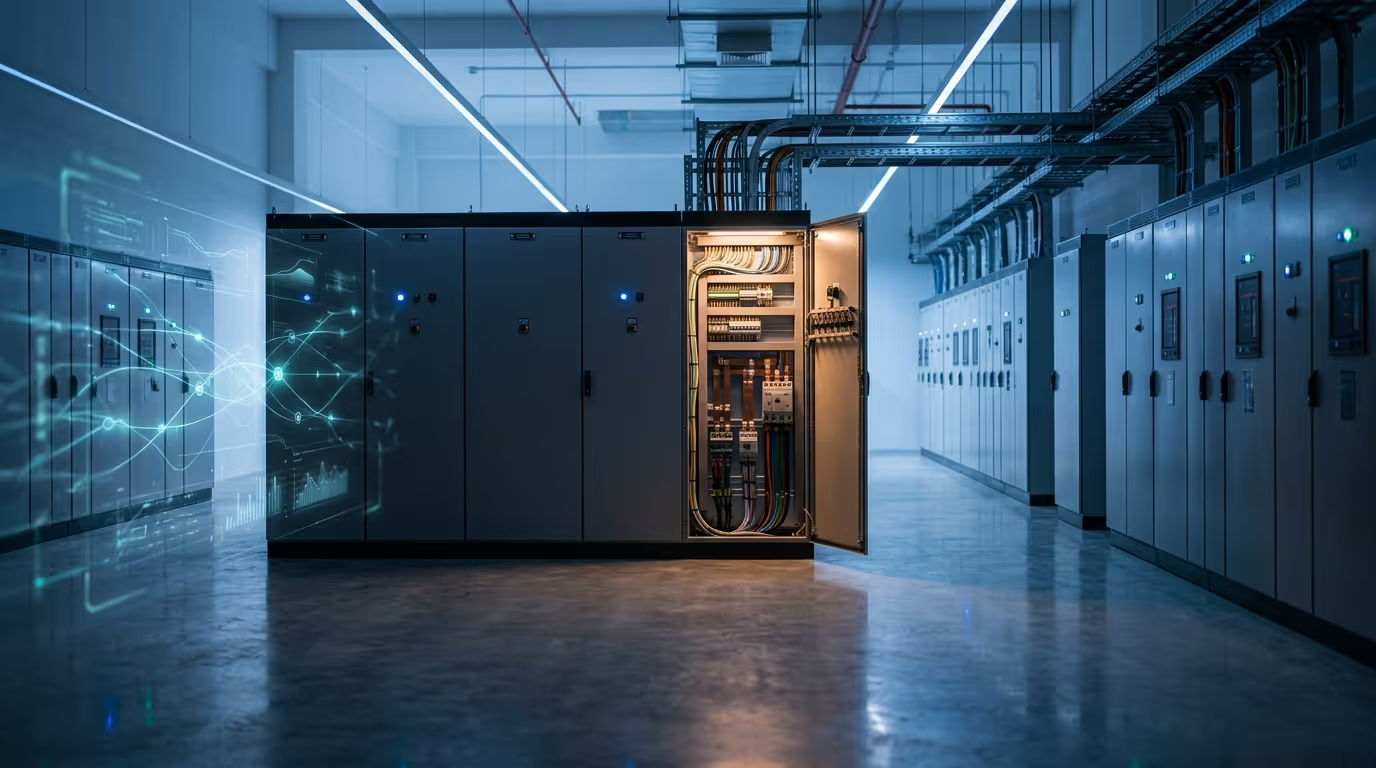
For manufacturing plants, electrical power is the lifeblood of operations. Yet many facility engineers only discover power quality problems after expensive equipment fails, production lines halt unexpectedly, or product defects spike without apparent cause. Understanding and monitoring power quality is essential for maintaining operational efficiency, protecting capital equipment, and controlling energy costs.
What Is Power Quality?
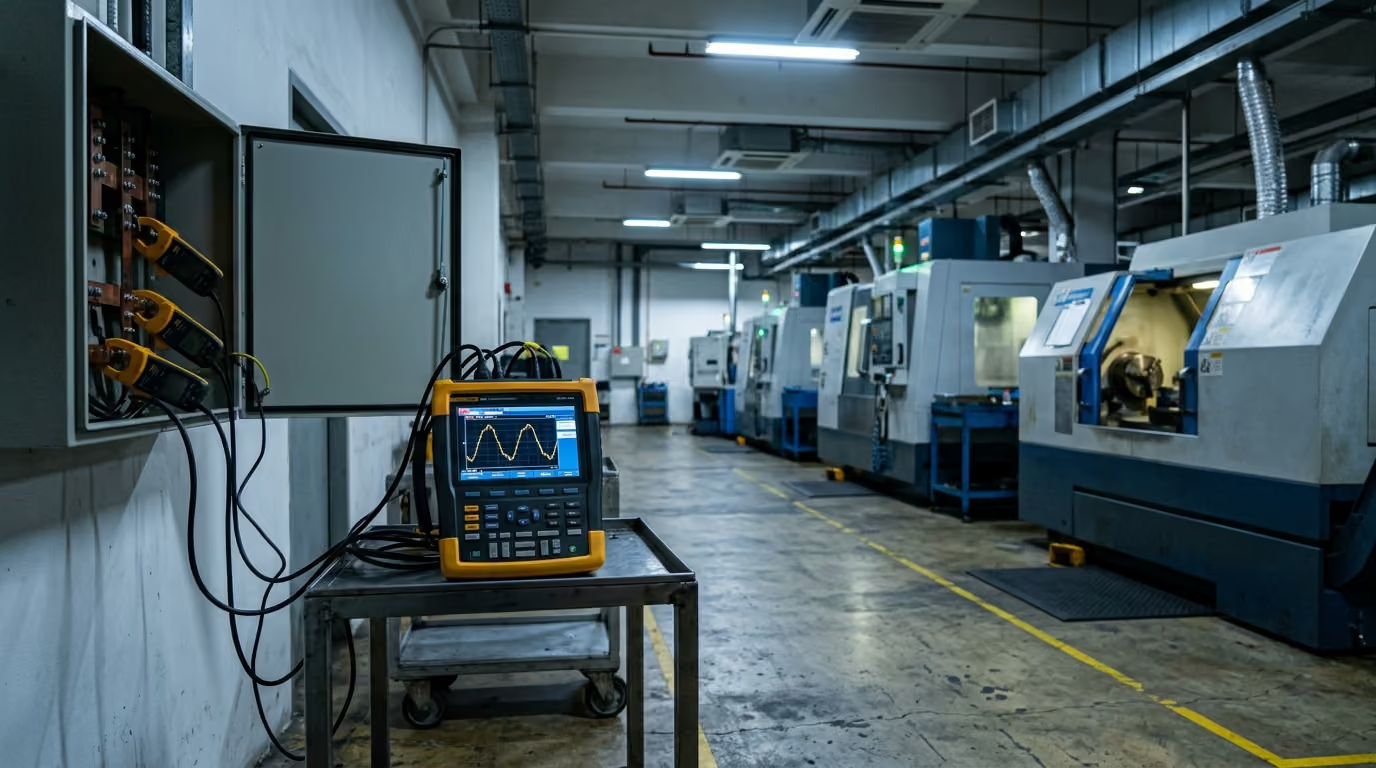
Power quality refers to the characteristics of the electrical supply that allow connected equipment to function correctly. In an ideal scenario, the voltage waveform is a clean sinusoidal wave at the rated frequency (50 Hz in Singapore and most of Southeast Asia) and voltage level. In reality, various disturbances can distort this waveform, leading to equipment malfunction, premature wear, and unexpected failures.
Common Power Quality Problems
Voltage Sags and Swells: Temporary reductions or increases in voltage magnitude. Even a sag lasting a fraction of a second can trip sensitive manufacturing equipment, halting an entire production line. Sags are the most frequent power quality event in industrial environments and are often caused by faults on the utility grid or large motor starts within the facility.
Harmonics: Distortions of the voltage or current waveform caused by non-linear loads such as variable frequency drives (VFDs), LED lighting systems, uninterruptible power supplies (UPS), and switch-mode power supplies. Harmonic currents increase losses in transformers and cables, cause overheating, and can interfere with sensitive control systems.
Transients: Brief but high-magnitude voltage spikes, often caused by lightning, capacitor switching, or load switching events. Transients can damage insulation, corrupt data in programmable logic controllers (PLCs), and degrade electronic components over time.
Voltage Flicker: Rapid, repetitive variations in voltage magnitude that can affect lighting quality and, in severe cases, disrupt sensitive manufacturing processes such as semiconductor fabrication or precision machining.
Frequency Variations: Deviations from the nominal 50 Hz supply frequency, typically caused by generator instability or grid-level imbalances. While rare in Singapore's well-regulated grid, frequency variations are more common in parts of Southeast Asia with less stable grid infrastructure.
How Power Quality Problems Impact Manufacturing
Equipment Damage and Shortened Lifespan
Harmonic currents cause additional heating in transformers, motors, and cables. A transformer operating under high harmonic load may need to be derated by 20-40% to avoid overheating, effectively reducing the usable capacity of the electrical infrastructure. Over time, excessive harmonics degrade insulation, leading to premature equipment failure and costly replacements.
Production Downtime
Voltage sags are the leading cause of process interruptions in manufacturing. Automated production lines with PLCs, robotic arms, and CNC machines are particularly sensitive. A sag of just 10-20% below nominal voltage lasting less than one second can cause a complete line shutdown, requiring restart procedures that may take hours, especially in continuous process industries like food and beverage or chemicals manufacturing.
Product Quality Defects
Subtle power quality variations can affect product consistency even when they do not cause outright equipment failure. In precision manufacturing, voltage fluctuations can alter motor speeds, affect heating processes, or corrupt measurement systems, resulting in products that fall outside specification tolerances. These defects may not be immediately attributable to power quality, making root cause analysis difficult without proper monitoring.
Increased Energy Costs
Poor power quality increases energy waste. Harmonic currents cause additional I-squared-R losses in conductors. Reactive power from non-linear loads reduces the power factor, potentially triggering power factor surcharges from the utility provider. Correcting these issues through monitoring and targeted mitigation can deliver measurable energy cost savings.
International Standards for Power Quality
Two key standards frameworks govern power quality assessment and limits:
IEEE 519 (Recommended Practice and Requirements for Harmonic Control in Electric Power Systems): Establishes limits for harmonic current injection at the point of common coupling (PCC) and voltage distortion limits for utility systems. Compliance with IEEE 519 is increasingly required in industrial supply contracts.
IEC 61000 Series (Electromagnetic Compatibility): Covers a broad range of power quality phenomena including harmonics (IEC 61000-3-2, IEC 61000-3-12), voltage fluctuations and flicker (IEC 61000-3-3, IEC 61000-3-11), and immunity requirements for equipment (IEC 61000-4 series). These standards are referenced in many Southeast Asian national electrical codes.
The Role of Power Quality Monitoring
The first step in addressing power quality problems is understanding them. A Power Quality Monitoring System (PQMS) continuously measures and records electrical parameters at key points throughout the distribution network. Modern PQMS platforms provide:
- Real-time waveform capture: Recording voltage and current waveforms during disturbance events for detailed analysis
- Harmonic spectrum analysis: Breaking down total harmonic distortion (THD) into individual harmonic orders to identify specific sources
- Event logging and trending: Building a historical database of sags, swells, transients, and other events to identify patterns and correlations with production issues
- Automated alerting: Notifying engineering teams when parameters exceed defined thresholds, enabling proactive response before equipment damage occurs
- Compliance reporting: Generating reports aligned with IEEE 519 and IEC 61000 requirements for utility interconnection agreements
Integrating PQ Monitoring with Broader Systems
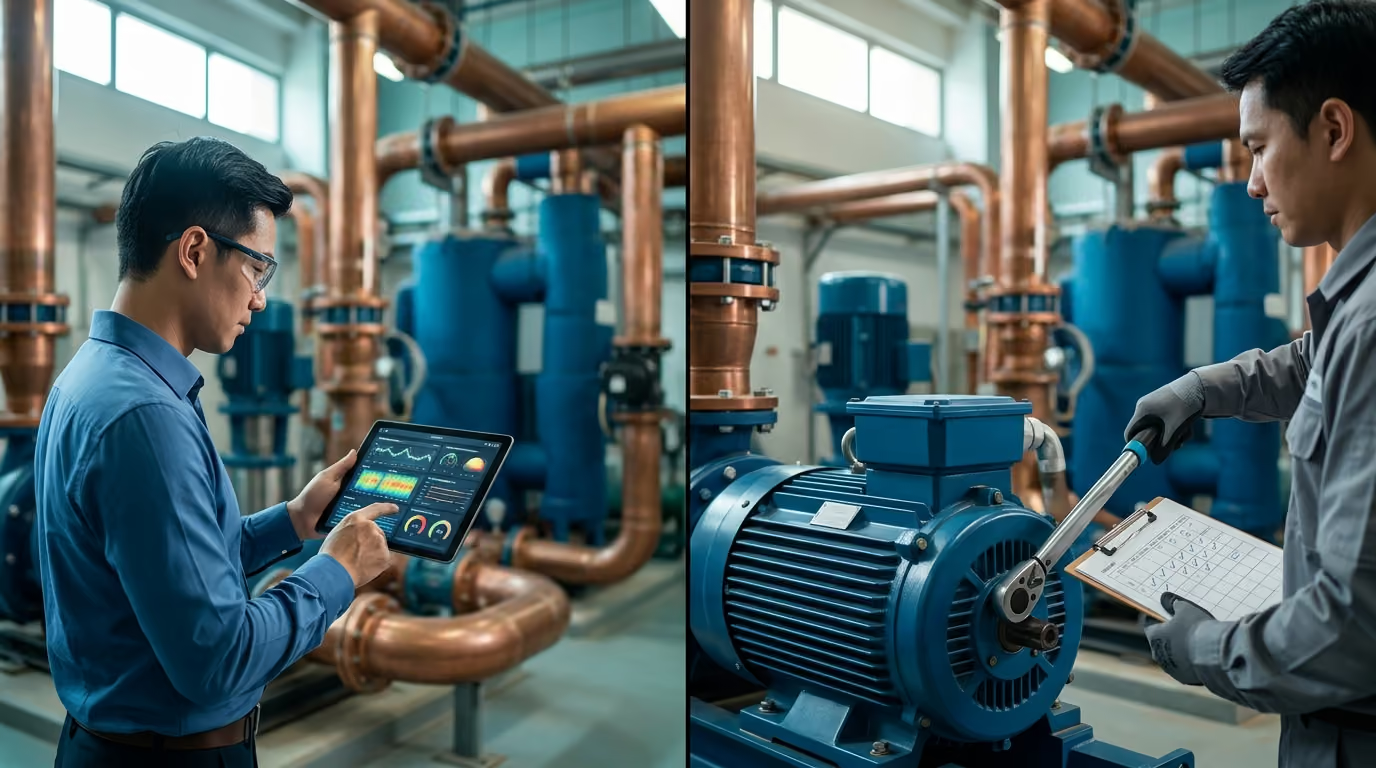
Power quality monitoring delivers the greatest value when integrated with other monitoring platforms. Combining PQ data with Energy Management System (EMS) data enables correlation between power quality events and energy consumption patterns. Integration with a Condition Monitoring System (CMS) allows engineers to correlate PQ events with equipment vibration, temperature, or performance data, supporting true predictive maintenance.
This integrated approach is particularly valuable in semiconductor fabrication, pharmaceutical manufacturing, and food processing, where both product quality and equipment protection are critical.
A Practical Approach to Power Quality Improvement
Step 1: Baseline Assessment
Install PQ monitoring at the main incoming switchboard and at major distribution panels feeding critical loads. Collect at least one month of data to establish baseline conditions and identify the most significant issues.
Step 2: Root Cause Analysis
Use the monitoring data to determine whether PQ problems originate from within the facility (internal sources like VFDs or large motor starts) or from the utility supply. This distinction is critical because the mitigation strategy differs significantly.
Step 3: Targeted Mitigation
Based on the analysis, implement appropriate solutions: active harmonic filters for harmonic distortion, UPS or voltage conditioning for sag-sensitive loads, surge protection devices for transient mitigation, or capacitor banks with detuning reactors for power factor correction in harmonic-rich environments.
Step 4: Continuous Monitoring
Power quality conditions change as loads evolve, new equipment is installed, and the utility grid changes. Permanent monitoring ensures that mitigation measures remain effective and that new problems are detected early.
Real-World Application
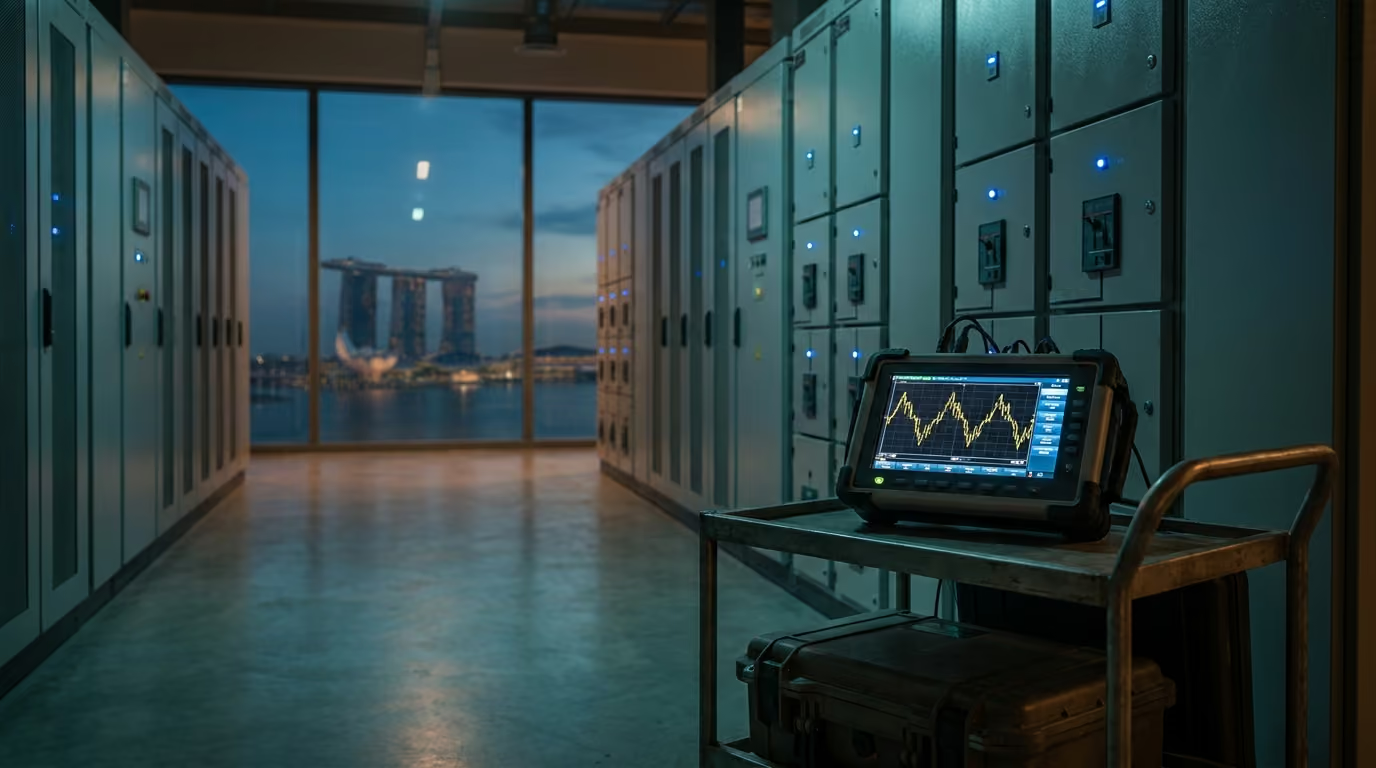
EcoXplore has deployed power quality monitoring systems for manufacturing and industrial clients across Southeast Asia. At GlobalFoundries Singapore, a comprehensive PQMS deployment provides continuous monitoring of power quality parameters across the semiconductor fabrication facility, supporting both equipment protection and process quality requirements.
The PecStar iEMS platform supports integration of power quality data with energy management and condition monitoring, providing plant engineers with a unified view of electrical infrastructure health.
To discuss power quality monitoring requirements for your manufacturing facility, contact our engineering team for an assessment.




电源质量问题如何影响制造业:工厂工程师指南
对于制造工厂来说,电力不仅仅是一项公用事业,它是运营的生命线。然而,许多设施经理忽视了一个关键方面:电源质量。与简单的停电不同,电源质量差会默默地降低设备性能,导致意外故障,并通过不可见的损失侵蚀盈利能力。
本指南探讨了电源质量的含义、为什么在制造业中很重要,以及现代监控系统如何帮助工厂工程师保护其资产并维持不间断生产。
什么是电源质量?
电源质量是指供应到您设施的电力的特性。理想情况下,电压应该是230V(单相)或400V(三相)的完美正弦波,频率为50Hz。实际上,电网和您的内部系统引入的失真会降低这个理想波形的质量。
常见的电源质量问题包括:
电源质量差对制造业的真实成本
电源质量差会产生多个失效模式,随着时间的推移而加重:
电源质量问题的常见来源
制造设施产生许多自己的电源质量问题:
标准和合规性:IEEE 519和IEC 61000
为了解决电源质量问题,行业标准已经出现:
不符合IEEE 519标准可能会导致电力公司罚款;未能维持IEC抗扰度标准会使您的设施面临设备故障和保险纠纷的风险。
电源质量监控系统如何解决该问题
现代电源质量监控系统提供了诊断和预防问题所需的可见性。EcoXplore的电源质量监控系统(PQMS)持续捕获波形数据、计算谐波、检测跌落和瞬变,并在损坏发生之前提醒工程师。
关键能力包括:
通过将PQMS数据与您设施的能源管理系统(EMS)和状态监测系统(CMS)整合,您创建了一个全面的电气健康视图,该视图将电源质量事件与设备性能、停机时间和能源成本联系起来。
现实世界示例:格芯公司
GlobalFoundries的新加坡半导体制造厂24/7运营,配备超敏感的工艺设备。即使是微秒级的电压瞬变也会破坏晶圆加工。通过在其主电源和备用电源上部署EcoXplore的PQMS,他们检测到了一种由UPS系统和内部发电机之间相互作用引起的谐波谐振模式。该数据查明了根本原因,使安装目标滤波器成为可能,消除了设备重置并提高了产品产量2%。在一年内,这转化为新加坡元200万的恢复生产价值。查看完整案例研究:GlobalFoundries PQMS实施。
采取行动:工厂工程师的路线图
如果电源质量不在您设施的雷达上,以下是开始的方法:
结论
电源质量不仅仅是一个技术脚注,它通过设备可靠性、生产一致性和能源效率直接影响您的底线。现代监控系统使其实用且经济地管理电源质量就像管理任何其他关键设施资产一样。通过了解电源质量的含义、了解电源质量差的成本,以及部署监控系统,工厂工程师可以保护其投资并维持现代制造所需的稳定、高质量电力。
准备好评估您设施的电源质量了吗?与EcoXplore联系以讨论为您的制造环境量身定制的电源质量审计。
ปัญหาคุณภาพไฟฟ้าส่งผลต่อการผลิตอย่างไร: คู่มือสำหรับวิศวกรโรงงาน
สำหรับโรงงานผลิต ไฟฟ้าไม่ได้เป็นแค่สาธารณูปโภค แต่เป็นชีวิตของการดำเนินงาน อย่างไรก็ตาม ผู้จัดการสถานที่จำนวนมากมองข้ามด้านหนึ่งที่สำคัญ: คุณภาพไฟฟ้า ซึ่งแตกต่างจากการเลิกจ้างอย่างง่าย คุณภาพไฟฟ้าที่ไม่ดีจะทำให้ประสิทธิภาพของอุปกรณ์ลดลงอย่างเงียบ ๆ ทำให้เกิดความล้มเหลวที่ไม่คาดคิด และทำให้ความสามารถในการสร้างกำไรลดลงจากการสูญเสียที่มองไม่เห็น
คำแนะนำนี้ สำรวจว่าคุณภาพไฟฟ้าหมายถึงอะไร เหตุใดจึงมีความสำคัญในการผลิต และวิธีที่ระบบการตรวจสอบสมัยใหม่ช่วยให้วิศวกรโรงงานปกป้องทรัพย์สินและรักษาการผลิตที่ไม่หยุดชะงัก
คุณภาพไฟฟ้าคืออะไร?
คุณภาพไฟฟ้าหมายถึงลักษณะของพลังงานไฟฟ้าที่ส่งให้กับสถานที่ของคุณ ในอุดมคติ แรงดันไฟฟ้าควรเป็นรูปคลื่นไซน์ที่สมบูรณ์แบบที่ 230V (เฟสเดียว) หรือ 400V (สามเฟส) และความถี่ 50Hz ในความเป็นจริง กริด และระบบภายในของคุณนำเสนอการบิดเบือนที่ทำให้รูปคลื่นในอุดมคติลดลง
ปัญหาคุณภาพไฟฟ้าทั่วไป ได้แก่:
ต้นทุนจริงของคุณภาพไฟฟ้าที่ไม่ดีในการผลิต
คุณภาพไฟฟ้าที่ไม่ดีสร้างหลายโหมดความล้มเหลว ที่รวมกันเมื่อเวลาผ่านไป:
แหล่งที่มาทั่วไปของปัญหาคุณภาพไฟฟ้า
สถานที่ผลิตสร้างปัญหาคุณภาพไฟฟ้าจำนวนมากของตนเอง:
มาตรฐานและการปฏิบัติตามข้อกำหนด: IEEE 519 และ IEC 61000
เพื่อแก้ไขคุณภาพไฟฟ้า มาตรฐานอุตสาหกรรมได้ปรากฏ:
ความไม่ปฏิบัติตามข้อ IEEE 519 อาจส่งผลให้บริษัทสาธารณูปโภคได้รับบทลงโทษ ความล้มเหลวในการรักษามาตรฐานภูมิคุ้มกัน IEC จะเปิดเผยสถานที่ของคุณต่ออุปกรณ์ความล้มเหลวและข้อพิพาท การประกันภัย
ระบบการตรวจสอบคุณภาพไฟฟ้าแก้ไขปัญหาอย่างไร
ระบบการตรวจสอบคุณภาพไฟฟ้าสมัยใหม่ มีการมองเห็นที่จำเป็นต่อการวินิจฉัยและป้องกันปัญหา ระบบ Power Quality Monitoring System (PQMS) ของ EcoXplore ยัง คงจับข้อมูลรูปคลื่นอย่างต่อเนื่อง คำนวณ harmonics ตรวพบ sags และ transients และแจ้งให้วิศวกรทราบก่อนเกิดความเสียหาย
ความสามารถที่สำคัญ ได้แก่:
โดยการรวมข้อมูล PQMS ของคุณกับ Energy Management System (EMS) และ Condition Monitoring System (CMS) ของสถานที่ของคุณ คุณสร้างมุมมองที่ครอบคลุมของสุขภาพไฟฟ้าที่เสนอราคา power quality events ด้วยประสิทธิภาพ downtime และ พลังงาน ค่า
ตัวอย่างโลกแห่งความจริง: GlobalFoundries
ของ GlobalFoundries Singapore semiconductor fabrication plant ดำเนินการ 24/7 กับเสมือนสุดขีด อุปกรณ์กระบวนการ แม้แต่ transient voltage ระดับ microsecond อาจ corruption wafer processing โดยการปรับใช้ EcoXplore PQMS ข้าม ค่าอาหารหลักและสำรองของพวกเขา พวกเขาตรวจพบลวดลายของ harmonic resonance เกิดจากปฏิสัมพันธ์ระหว่าง UPS systems และในสถานที่ generators ข้อมูลที่ pinpointed root cause เปิดใช้งาน targeted filter installation ที่ eliminated equipment resets และ improved product yield โดย 2% เหนือปีนี้ translated to SGD 2 million in recovered production value ดูกรณีศึกษาเต็ม: GlobalFoundries PQMS Implementation
การดำเนิน: ขั้นตอนของวิศวกรโรงงาน
ถ้า คุณภาพไฟฟ้า ไม่ได้อยู่บนเรดาร์สถานที่ของคุณ นี่คือวิธี เริ่มต้น:
บทสรุป
คุณภาพไฟฟ้า ไม่ได้ เป็นเพียง เชิงเทคนิค เชิงอรรถ มันโดยตรง กระทบ บรรทัดล่าง ของคุณ ผ่าน อุปกรณ์ reliability การผลิต ความสม่ำเสมอและ พลังงาน ประสิทธิภาพ ระบบ ที่ทันสมัย ทำให้ งาน และ ราคา ถูก ต่อ จัดการ คุณภาพไฟฟ้า เช่นเดียวกับ อื่น ๆ สำคัญ สถานที่ ทรัพย์สิน โดยการทำความเข้าใจ อะไร ไฟฟ้า คุณภาพ แต่ สิ่ง ที่รู้ ค่า ใช้จ่าย ไม่ดี คุณภาพ และ deploying ระบบการตรวจสอบ โรงงาน วิศวกร สามารถ ปกป้อง เพิ่ม เติม ประถมศึกษา และ รักษา ที่เสถียร คุณภาพสูง ไฟฟ้า ว่า สมัยใหม่ ผลิตการ demands
พร้อม ประเมิน สถานที่คุณภาพไฟฟ้า? ติดต่อ EcoXplore ที่จะ พูดคุย ไฟฟ้า คุณภาพ audit tailored ไป สถานที่ผลิต
Bagaimana Masalah Kualitas Daya Mempengaruhi Manufaktur: Panduan untuk Insinyur Pabrik
Bagi pabrik manufaktur, listrik bukan hanya utilitas, ini adalah kehidupan operasi. Namun banyak manajer fasilitas mengabaikan satu aspek penting: kualitas daya. Tidak seperti pemadaman sederhana, kualitas daya yang buruk beroperasi secara diam-diam, menurunkan kinerja peralatan, menyebabkan kegagalan tak terduga, dan mengikis profitabilitas melalui kerugian yang tidak terlihat.
Panduan ini mengeksplorasi apa itu kualitas daya, mengapa itu penting dalam manufaktur, dan bagaimana sistem pemantauan modern membantu insinyur pabrik melindungi aset mereka dan mempertahankan produksi yang tidak terputus.
Apa itu Kualitas Daya?
Kualitas daya mengacu pada karakteristik daya listrik yang dikirimkan ke fasilitas Anda. Idealnya, tegangan harus menjadi gelombang sinus yang sempurna pada 230V (satu fase) atau 400V (tiga fase) dan frekuensi 50Hz. Dalam kenyataan, jaringan dan sistem internal Anda memperkenalkan distorsi yang menurunkan bentuk gelombang ideal ini.
Masalah kualitas daya umum meliputi:
Biaya Nyata Kualitas Daya Buruk dalam Manufaktur
Kualitas daya yang buruk menciptakan berbagai mode kegagalan yang bertambah seiring waktu:
Sumber Umum Masalah Kualitas Daya
Fasilitas manufaktur menghasilkan banyak masalah kualitas daya mereka sendiri:
Standar dan Kepatuhan: IEEE 519 dan IEC 61000
Untuk mengatasi kualitas daya, standar industri telah muncul:
Ketidakpatuhan dengan IEEE 519 dapat menghasilkan penalti utilitas; kegagalan untuk mempertahankan standar kekebalan IEC mengekspos fasilitas Anda ke kegagalan peralatan dan perselisihan asuransi.
Bagaimana Sistem Pemantauan Kualitas Daya Menyelesaikan Masalah
Sistem pemantauan kualitas daya modern menyediakan visibilitas yang diperlukan untuk mendiagnosis dan mencegah masalah. Power Quality Monitoring System (PQMS) EcoXplore secara terus menerus menangkap data bentuk gelombang, menghitung harmonik, mendeteksi sag dan transient, dan memperingatkan insinyur sebelum kerusakan terjadi.
Kemampuan kunci meliputi:
Dengan mengintegrasikan data PQMS dengan Energy Management System (EMS) dan Condition Monitoring System (CMS) fasilitas Anda, Anda menciptakan pandangan komprehensif tentang kesehatan kelistrikan yang menghubungkan peristiwa kualitas daya dengan kinerja peralatan, waktu henti, dan biaya energi.
Contoh Dunia Nyata: GlobalFoundries
Pabrik fabrikasi semikonduktor GlobalFoundries Singapore beroperasi 24/7 dengan peralatan proses yang sangat sensitif. Bahkan transien tegangan tingkat mikrodetik dapat merusak pemrosesan wafer. Dengan menerapkan PQMS EcoXplore di umpan daya utama dan cadangan mereka, mereka mendeteksi pola resonansi harmonik yang disebabkan oleh interaksi antara sistem UPS dan generator internal mereka. Data tersebut mengidentifikasi akar penyebab, memungkinkan instalasi filter bertarget yang menghilangkan reset peralatan dan meningkatkan hasil produk sebesar 2%. Selama setahun, ini diterjemahkan menjadi SGD 2 juta dalam nilai produksi yang dipulihkan. Lihat studi kasus lengkap: GlobalFoundries PQMS Implementation.
Mengambil Tindakan: Roadmap Insinyur Pabrik
Jika kualitas daya bukan bagian dari radar fasilitas Anda, berikut adalah cara memulai:
Kesimpulan
Kualitas daya bukan hanya catatan teknis, itu secara langsung mempengaruhi lini bawah Anda melalui keandalan peralatan, konsistensi produksi, dan efisiensi energi. Sistem pemantauan modern menjadikan praktis dan terjangkau untuk mengelola kualitas daya seperti aset fasilitas penting lainnya. Dengan memahami apa itu kualitas daya, mengetahui biaya kualitas buruk, dan menerapkan sistem pemantauan, insinyur pabrik dapat melindungi investasi mereka dan mempertahankan daya berkualitas tinggi dan stabil yang diminta manufaktur modern.
Siap untuk menilai kualitas daya fasilitas Anda? Hubungi EcoXplore untuk membahas audit kualitas daya yang disesuaikan dengan lingkungan manufaktur Anda.
Vấn đề Chất lượng Điện ảnh hưởng đến Sản xuất như thế nào: Hướng dẫn cho Kỹ sư Nhà máy
Đối với các nhà máy sản xuất, điện không chỉ là một tiện ích, nó là sinh mệnh của hoạt động. Tuy nhiên, nhiều quản lý cơ sở bỏ qua một khía cạnh quan trọng: chất lượng điện. Không giống như mất điện đơn giản, chất lượng điện kém hoạt động âm thầm, làm giảm hiệu suất thiết bị, gây ra lỗi không mong đợi, và làm mòn lợi nhuận thông qua các tổn thất không nhìn thấy.
Hướng dẫn này khám phá chất lượng điện có nghĩa là gì, tại sao nó quan trọng trong sản xuất, và cách các hệ thống giám sát hiện đại giúp các kỹ sư nhà máy bảo vệ tài sản của họ và duy trì sản xuất không bị gián đoạn.
Chất lượng Điện là gì?
Chất lượng điện đề cập đến các đặc điểm của dòng điện được cung cấp cho cơ sở của bạn. Lý tưởng nhất, điện áp phải là một sóng hình sin hoàn hảo ở 230V (một pha) hoặc 400V (ba pha) và tần số 50Hz. Trên thực tế, lưới điện và các hệ thống nội bộ của bạn giới thiệu các biến dạng làm giảm dạng sóng lý tưởng này.
Các vấn đề chất lượng điện phổ biến bao gồm:
Chi phí Thực tế của Chất lượng Điện Xấu trong Sản xuất
Chất lượng điện kém tạo ra nhiều chế độ hỏng hóc kết hợp lại theo thời gian:
Nguồn Phổ biến của Vấn đề Chất lượng Điện
Các cơ sở sản xuất tạo ra nhiều vấn đề chất lượng điện của chính họ:
Tiêu chuẩn và Tuân thủ: IEEE 519 và IEC 61000
Để giải quyết chất lượng điện, các tiêu chuẩn ngành đã xuất hiện:
Không tuân thủ IEEE 519 có thể dẫn đến phạt tiện ích; không duy trì các tiêu chuẩn miễn dịch IEC có thể phơi bày cơ sở của bạn trước các lỗi thiết bị và tranh chấp bảo hiểm.
Hệ thống Giám sát Chất lượng Điện Giải quyết Vấn đề như thế nào
Hệ thống giám sát chất lượng điện hiện đại cung cấp khả năng hiển thị cần thiết để chẩn đoán và ngăn ngừa các vấn đề. Hệ thống Giám sát Chất lượng Điện (PQMS) của EcoXplore liên tục nắm bắt dữ liệu dạng sóng, tính toán hài bộ, phát hiện sụt áp và quá độ, và cảnh báo các kỹ sư trước khi tổn hại xảy ra.
Các khả năng chính bao gồm:
Bằng cách tích hợp dữ liệu PQMS với Hệ thống Quản lý Năng lượng (EMS) và Hệ thống Giám sát Tình trạng (CMS) của cơ sở bạn, bạn tạo ra một cái nhìn toàn diện về sức khỏe điện liên kết các sự kiện chất lượng điện với hiệu suất thiết bị, thời gian ngừng hoạt động và chi phí năng lượng.
Ví dụ Thế giới Thực: GlobalFoundries
Nhà máy chế tạo bán dẫn GlobalFoundries Singapore hoạt động 24/7 với thiết bị quy trình cực kỳ nhạy cảm. Thậm chí quá độ điện áp ở cấp micro giây cũng có thể phá hủy xử lý wafer. Bằng cách triển khai PQMS EcoXplore trên các nguồn cấp chính và dự phòng của họ, họ phát hiện một mô hình cộng hưởng hài bộ do tương tác giữa hệ thống UPS và máy phát điện tại chỗ. Dữ liệu xác định nguyên nhân gốc rễ, cho phép cài đặt bộ lọc có mục tiêu loại bỏ việc khởi động lại thiết bị và cải thiện sản lượng sản phẩm 2%. Trong một năm, điều này dịch thành SGD 2 triệu trong giá trị sản xuất được phục hồi. Xem trường hợp học tập đầy đủ: Triển khai GlobalFoundries PQMS.
Hành động: Lộ trình Kỹ sư Nhà máy
Nếu chất lượng điện không nằm trong radarr cơ sở của bạn, đây là cách bắt đầu:
Kết luận
Chất lượng điện không chỉ là một chú thích kỹ thuật, nó trực tiếp ảnh hưởng đến dòng tiền của bạn thông qua độ tin cậy của thiết bị, tính nhất quán của sản xuất và hiệu suất năng lượng. Hệ thống giám sát hiện đại làm cho nó thực tế và giá cả phải chăng để quản lý chất lượng điện giống như bất kỳ tài sản cơ sở quan trọng nào khác. Bằng cách hiểu chất lượng điện có nghĩa là gì, biết chi phí của chất lượng kém và triển khai các hệ thống giám sát, các kỹ sư nhà máy có thể bảo vệ đầu tư của họ và duy trì điện ổn định, chất lượng cao mà sản xuất hiện đại yêu cầu.
Sẵn sàng để đánh giá chất lượng điện của cơ sở bạn? Liên hệ với EcoXplore để thảo luận về kiểm toán chất lượng điện phù hợp với môi trường sản xuất của bạn.
More About Ecoxplore
We are dedicated to empowering businesses with software and services that drive efficiency and growth
View more

.svg)

.svg)

.svg)
.svg)

More About Ecoxplore
We are dedicated to empowering businesses with software and services that drive efficiency and growth
View moreข้อมูลเพิ่มเติมเกี่ยวกับ Ecoxplore
เรามุ่งมั่นในการช่วยให้ธุรกิจของคุณทำงานได้อย่างมีประสิทธิภาพและเติบโตอย่างยั่งยืนด้วยซอฟต์แวร์และบริการของเรา
ดูเพิ่มเติมMore About Ecoxplore
We are dedicated to empowering businesses with software and services that drive efficiency and growth
View moreLebih Banyak Tentang Ecoxplore
Kami berdedikasi untuk memberdayakan bisnis dengan perangkat lunak dan layanan yang mendorong efisiensi dan pertumbuhan
Lihat lebih banyakMore About Ecoxplore
We are dedicated to empowering businesses with software and services that drive efficiency and growth
View moreLebih Banyak Tentang Ecoxplore
Kami berdedikasi untuk memberdayakan bisnis melalui perangkat lunak dan layanan yang mendorong efisiensi serta pertumbuhan.
Lihat selengkapnyaMore About Ecoxplore
We are dedicated to empowering businesses with software and services that drive efficiency and growth
View moreHiểu thêm về Ecoxplore
Chúng tôi cam kết trao quyền cho các doanh nghiệp bằng phần mềm và dịch vụ giúp tăng cường hiệu quả và phát triển
Xem thêm